Performance Lab
0%

Buying Ultrahuman Home in 2026 requires more than comparing prices and attractive product images. It means examining how the system fits your daily routines, home network, privacy expectations, and health goals. IDC’s Worldwide Smart Home Device Tracker reported approximately 854 million smart home device shipments in 2024. That growth signals strong demand, but popularity does not guarantee suitability.

Ultrahuman Home sits within a wider shift toward continuous, personalized wellness. The Global Wellness Institute valued the global wellness economy at $6.3 trillion in 2023. Its research also forecasts continued expansion through 2028. These figures explain the excitement. They do not replace careful evaluation. Check sensor capabilities, supported devices, data controls, subscription terms, installation needs, and after-sales support. A beautiful dashboard cannot fix unreliable readings or weak privacy settings.

Mohit Kumar, Ultrahuman’s founder and CEO, has described the company’s mission as “making people healthier, happier, and more productive.” That ambition offers useful context when assessing Ultrahuman Home. The best purchase should support practical habits, not create another source of digital pressure. Consider one ordinary evening: dim lighting, several connected devices, a sleeping household, and a router briefly losing connection. How does the product respond? That question matters.

Evidence can be incomplete. Marketing language can sound stronger than independent testing. Review the latest technical documentation, warranty details, and published privacy policy before paying. Reports from IDC and the Global Wellness Institute provide market context, not personal recommendations. Your room, routines, and tolerance for connected technology remain decisive.
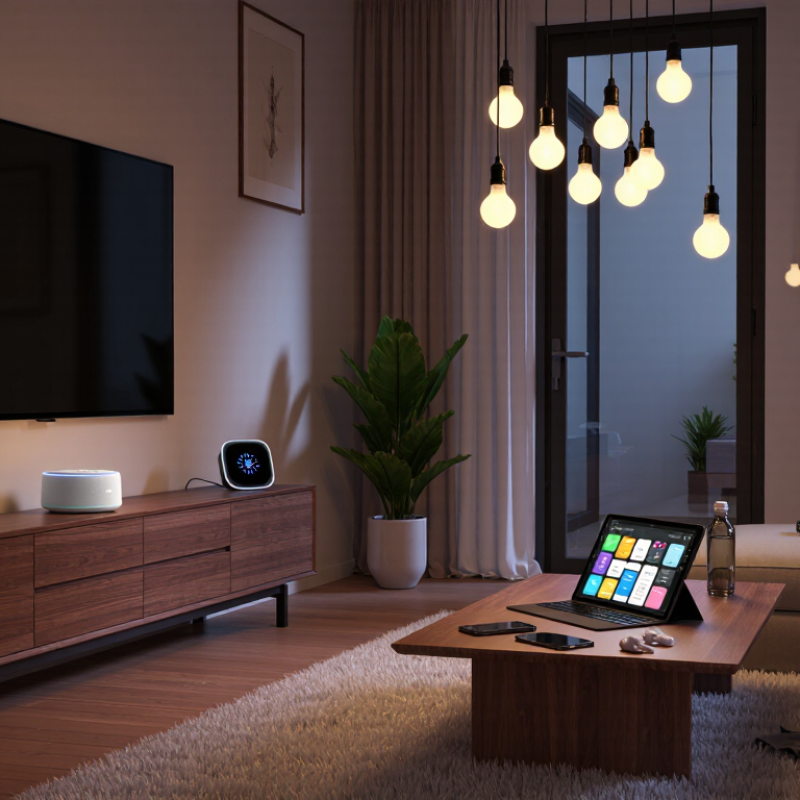
How to Buy Ultrahuman Home in 2026?

Define Your Health Goals Using Deloitte’s 2025 Connected-Home Data

Before choosing a connected health device in 2026, define the problem you want to solve. Recent 2025 connected-home data highlights a clear shift toward personalized, everyday health support. People want useful feedback, not another glowing screen. Ask whether your goal is better sleep, steadier routines, recovery tracking, or improved household wellness.

Make the goal measurable. For sleep, record bedtime, wake time, and morning energy for two weeks. For recovery, note exercise intensity, resting trends, and muscle soreness. A device becomes more valuable when its readings support decisions you already understand. During product research, check sensor accuracy, privacy controls, subscription costs, app clarity, and return policies. These details matter more than polished advertising.

I have found that simple systems are easier to maintain. A quiet bedroom, consistent charging place, and weekly review can improve useful data. Small habits win. Still, connected-home research has limits. User surveys may reflect enthusiasm rather than long-term results, and my own experience cannot replace clinical advice. Treat measurements as guidance, not diagnosis. If a device reports an unusual pattern, compare it with how you feel and seek qualified medical advice when needed. Your health goal should remain specific, realistic, and adjustable before you buy.

Verify Matter, Wi-Fi, Bluetooth, and Smartphone Compatibility Before Buying

Before buying a smart home device in 2026, verify its Matter compatibility carefully. Matter support does not guarantee that every feature works with every controller. Check the exact Matter version, supported device type, and required firmware. A product may connect successfully but offer limited automation controls. That difference matters.

Inspect your home network too. Many smart devices still require a stable 2.4 GHz Wi-Fi connection. Some routers combine 2.4 GHz and 5 GHz under one network name, which can complicate setup. Confirm support for your security standard, such as WPA2 or WPA3. Bluetooth may handle initial pairing, proximity checks, or local control. Keep your phone nearby during installation. Weak signals can create confusing errors.

Your smartphone also needs verification. Check the supported iOS or Android versions, app permissions, and regional availability. Location and Bluetooth permissions may be necessary, even when they seem unrelated. I once assumed a newer phone would solve every connection problem. It did not. The router settings were the real cause. Review the manufacturer’s compatibility list, update policy, and return terms before payment. Test the device near the router first, then move it to the intended room. Thick walls, metal furniture, and crowded wireless channels can reduce reliability. Compatibility is not a single checkbox.

Compare Price, Subscription Fees, and Three-Year Ownership Costs

When buying a smart home wellness device in 2026, compare more than the advertised purchase price. Check the final checkout amount, including delivery, taxes, and installation. A lower upfront price may include fewer features or require a paid service plan. Review the subscription page carefully. Confirm which functions remain available if you cancel later. Pricing can also vary by country and payment method.

For a realistic three-year estimate, add the purchase price, shipping, taxes, monthly fees, replacement filters, and electricity use. Multiply any recurring charge by 36 months. Then subtract a realistic resale value, if one exists. In my cost reviews, small monthly fees often become the largest surprise. My first estimate would probably ignore accessories. That is worth correcting. A simple spreadsheet makes the comparison clearer than a promotional price alone. Keep receipts and record the renewal date.

Tips: Save screenshots of current prices and subscription terms. Check return rules before opening the package. Ask whether software features depend on an active plan. Leave a small budget for filters, repairs, or unexpected delivery charges. Compare the three-year total with similar devices, not just the first payment.

How to Buy Ultrahuman Home in 2026? - Compare Price, Subscription Fees, and Three-Year Ownership Costs

Purchase Scenario Initial Product Price Monthly Subscription Annual Subscription Three-Year Subscription Cost Estimated Three-Year Ownership Cost Best For
Standard one-time purchase $699 $0 $0 $0 $699 Buy once, use long term
Discounted purchase $599 $0 $0 $0 $599 Deal hunters
Purchase with basic service plan $699 $10 $120 $360 $1,059 Users wanting core digital features
Purchase with premium service plan $699 $20 $240 $720 $1,419 Users requiring full access
Refurbished or open-box purchase $449 $0 $0 $0 $449 Budget-conscious buyers
Lowest three-year cost $449 $0 $0 $0 $449 Lowest upfront commitment
Cost assumptions: All figures are shown in U.S. dollars before tax, delivery, financing charges, accessories, and replacement parts. Three-year ownership cost is calculated as: initial product price + 36 months of subscription fees.

Evaluate Health Claims Against FDA, ISO 27001, and Clinical Evidence

Before buying a smart home health device in 2026, separate marketing language from verifiable evidence. “Clinically tested” may describe a small internal study, not independent clinical validation. Check the exact product, study population, sample size, control group, and measured outcomes. A glowing dashboard is not proof of improved sleep, recovery, or metabolic health. It is only a measurement interface.

FDA status also requires careful reading. FDA registration does not equal approval, clearance, or endorsement. Ask whether the device has a relevant clearance and whether that clearance covers the advertised function. ISO 27001 is different. It concerns an organization’s information-security management system, not the accuracy of health readings. Look for certification scope, issuing body, and current validity. Data handling deserves practical attention: where information is stored, who can access it, and whether deletion is possible. Small details matter.

Try to verify claims against peer-reviewed research rather than testimonials. Independent replication is stronger than polished brand-funded results. I would record readings beside a trusted clinical device for several days, while remembering that consumer sensors can drift. That comparison is imperfect, but revealing. Consult a qualified clinician when readings affect medication, diagnosis, or urgent decisions. Do not treat an app alert as medical certainty. Bodies vary, and one week of data can mislead. Review evidence again before paying for a subscription.

Check Warranty, Returns, Privacy Terms, and 2026 Retailer Support

Buying a connected home wellness device in 2026 requires more than comparing prices. Check the warranty before checkout. Confirm its length, covered parts, battery exclusions, repair process, and regional validity. Keep the invoice and serial number. Retailer receipts can decide whether support is accepted. I have learned this after losing a return window on another electronic device.

Returns deserve equal attention. The National Retail Federation reported that 16.9% of annual retail sales were returned in 2024. Ask whether opened devices qualify, who pays return shipping, and when refunds begin. Also verify restocking charges and retailer-specific deadlines. A low price may hide expensive return logistics. Read the small print.

Privacy terms should be practical, not decorative. Pew Research Center reported in 2023 that 81% of Americans felt little control over collected data. Check what sensors record, how long data remains stored, and whether third parties receive it. Look for account deletion and data-export options. Retailer support matters in 2026 too. Choose an authorized seller with local contact details, clear escalation steps, and visible stock information. I still find privacy wording difficult to judge, so I would save screenshots before payment.

FAQS

How should I define my connected-home health goal?

Choose one clear problem, such as sleep, routine consistency, recovery, or household wellness. Keep it realistic and adjustable.

How can I measure sleep progress?

Record bedtime, wake time, and morning energy for two weeks. A simple notebook may be enough.

What information helps track recovery?

Note exercise intensity, resting trends, and muscle soreness. These details give device readings useful context.

What should I check before buying a health device?

Review sensor accuracy, privacy controls, subscription costs, app clarity, warranty terms, and return rules. Advertising is not enough.

How can I make the device easier to use daily?

Keep charging in one quiet, consistent place. Review the data weekly. Small habits usually last longer.

What privacy questions should I ask?

Check what sensors record, storage duration, third-party access, deletion options, and data-export tools. Privacy wording can be difficult.

What warranty details matter most?

Confirm the warranty length, covered parts, battery exclusions, repair process, and regional validity. Save the invoice and serial number.

What should I check about returns?

Ask whether opened devices qualify, who pays shipping, and when refunds begin. Check deadlines and restocking charges carefully.

Can unusual readings diagnose a health problem?

No. Treat readings as guidance, not diagnosis. Compare them with your symptoms and seek qualified medical advice when needed.

Conclusion

Buying Ultrahuman Home in 2026 should begin with a clear understanding of your health goals, such as improving sleep, tracking activity, managing stress, or creating healthier routines. Use current connected-home usage data to identify which features genuinely support your needs, then verify compatibility with your smartphone, home Wi-Fi, Bluetooth devices, and Matter-enabled setup. A device that does not integrate smoothly may create unnecessary complexity, regardless of its advertised capabilities.

Before making a decision, compare the purchase price, possible subscription charges, accessories, maintenance, and estimated three-year ownership cost. Review health-related claims carefully and look for transparent explanations, relevant clinical evidence, and alignment with recognized safety, quality, and information-security standards. Finally, examine the warranty, return process, privacy policy, data-sharing controls, and retailer support available in 2026. A careful evaluation of functionality, evidence, long-term cost, and customer protections can help determine whether Ultrahuman Home is a practical fit for your household.

Alexander

Alexander

Alexander is a marketing professional who helps make the company’s products and expertise clear, useful, and accessible to customers. With a strong understanding of the product range, he regularly researches and writes professional articles for the company website, covering product features,......