China has become an important sourcing destination for fertility-monitoring devices, but the label “manufacturer” can cover very different businesses. Some companies design sensors and firmware in-house; others focus on assembly, testing, or private-label production. For buyers exploring China’s Ovulation Prediction Sensor manufacturers, that difference matters. A polished product photo cannot show how reliably a device captures temperature changes, interprets hormone-related data, or performs across repeated use.
This guide introduces the main supplier considerations, from sensor type and app integration to production capacity and quality controls. Ask for clear technical specifications, sample units, test methods, and evidence supporting any performance claims. Check whether the company can explain calibration, data handling, and common sources of measurement error in plain language. Small details count. A sensor that feels comfortable on the wrist may still need careful validation before its readings can support a user-facing prediction. These devices can help track patterns, but they should not be presented as a guaranteed way to identify ovulation or diagnose a medical condition.
There is no single best supplier for every brand. Product requirements, target users, budget, and intended markets all shape the decision. Supplier documents also deserve scrutiny; I would not treat a certificate or a sample result as proof of consistent production on its own. The comparison ahead offers practical questions for assessing Chinese manufacturers, while leaving room for independent testing and due diligence. A useful shortlist starts with evidence, not promises.
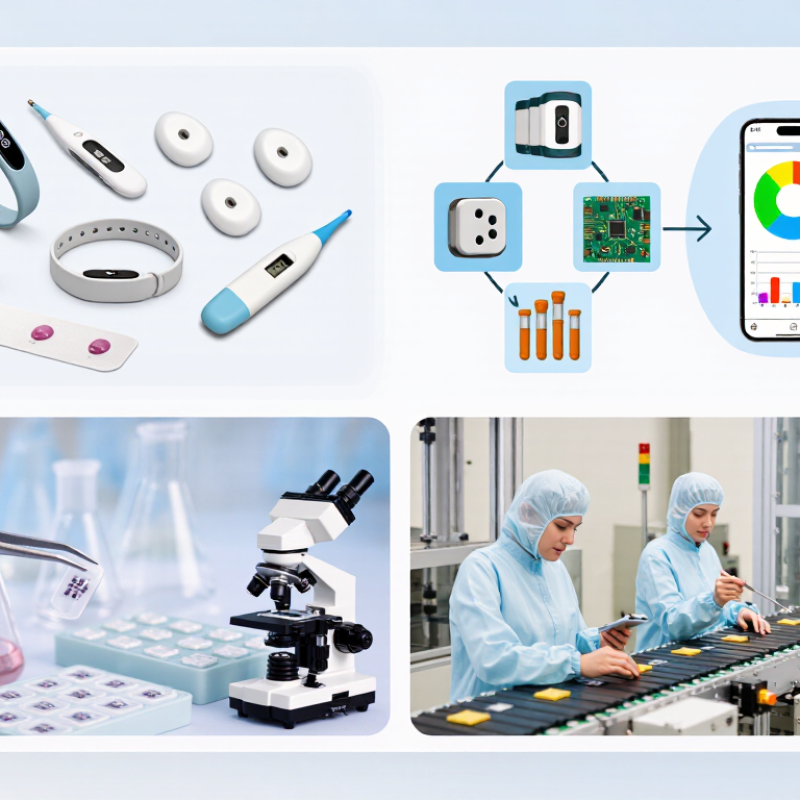
An LH-based ovulation sensor looks for a rise in luteinizing hormone in urine. This surge commonly signals that ovulation may occur within about 24–36 hours, though timing varies between people and cycles. The American Society for Reproductive Medicine describes urinary LH tests as predicting ovulation within one to two days. A prediction is not confirmation.
Timing matters. A study of 221 women across 625 menstrual cycles found a six-day fertile window ending on ovulation day; conception chances were highest the day before ovulation (Wilcox et al., New England Journal of Medicine, 1995). Sensors can help identify this short window, but a single reading may miss a brief or gradual rise. Real bodies are less tidy than charts.
Tips: Test at a consistent time and follow the device’s instructions. Note the date, reading, and any changes in your cycle. If results stay unclear, or cycles are irregular, discuss them with a qualified clinician. A sensor offers useful clues, not a diagnosis.
China Top Ovulation Prediction Sensor Manufacturers
Sensor Technologies: Urinary LH, Skin Temperature, and Wearables
For Chinese manufacturers, sensor selection shapes both product design and clinical usefulness. Urinary luteinizing hormone (LH) tests detect the hormone surge that usually precedes ovulation. The American Society for Reproductive Medicine’s committee opinion on natural fertility notes that ovulation commonly follows an LH surge within one to two days. Results can still vary between users and cycles. A clear reader display matters when someone is testing at home, often beside a bathroom sink before work.
Skin-temperature sensors and wearables offer a different signal. They track small changes across the cycle, sometimes during sleep, rather than detecting LH directly. Readings can shift with fever, room temperature, alcohol, or disrupted sleep. Algorithms should be tested against established reference methods and across varied cycle patterns. More data does not automatically mean better prediction. That distinction is easy to miss. The World Health Organization’s 2023 infertility report estimates that about one in six people experience infertility during their lifetime; this is important context, not evidence that any sensor improves fertility outcomes.
Tips: Ask suppliers for study protocols, participant numbers, and performance across irregular cycles. Check how devices handle missing readings and explain uncertainty. A polished chart is useful, but it is not clinical validation.
China Top Ovulation Prediction Sensor Manufacturers
China’s ovulation prediction sensor manufacturers serve healthcare distributors, fertility-care platforms, and consumer device companies. Common products include urine LH test readers, compatible cartridges, and compact connected monitors. Some suppliers also develop temperature-based wearables, which track cycle patterns rather than predict ovulation directly. On factory floors, practical differences show up in sensor calibration, cartridge fit, display readability, and packaging protection. Small details matter. Buyers can request performance data from varied sample conditions and clear instructions for use. These devices support cycle tracking; they do not replace clinical assessment.
OEM services often cover casing, interface language, packaging, app connectivity, and test-strip specifications. A capable supplier should be able to share production inspection plans and traceable batch documentation. Ask how it checks repeatability and handles complaints after shipment. Export markets differ in labeling, registration, and quality requirements, so check each target market carefully. China-based suppliers serve domestic and overseas channels, including pharmacies, online retailers, and private-label wellness businesses. Still, specifications on paper may not match daily use. Pilot samples and usability feedback can reveal confusing prompts or hard-to-read results before a larger order. Not every cycle behaves alike.
The six-day fertile window is a biological range, not a fixed appointment. It generally includes the five days before ovulation and ovulation day, because sperm may remain viable for several days while an egg has a shorter lifespan. A useful sensor should show more than a single peak reading. It should track relevant signals, such as urinary luteinizing hormone or estrogen-related changes, and explain uncertainty in plain language. Timing varies between cycles. That matters.
For manufacturers, performance claims need clinical context. Independent studies should compare predictions with a stated reference, such as serial hormone testing and, where appropriate, ultrasound-confirmed ovulation. Report sensitivity, false alerts, missed windows, and the number of cycles assessed; averages alone can hide weaker performance in irregular cycles. Include participant diversity, device failures, and how missing readings were handled. Small details matter. A sensor tested only under ideal conditions may appear more precise than it is at home, where sleep, hydration, and inconsistent sampling can affect readings. Claims of exact ovulation timing also deserve scrutiny: even a well-validated tool estimates a changing process, not certainty.
When assessing China-based ovulation prediction sensor manufacturers, check the quality system and the product’s regulatory status separately. ISO 13485 certification indicates a medical-device quality management system; it does not, by itself, prove that a sensor’s predictions are clinically accurate. Ask to see the certificate’s scope, audit dates, and controls for design changes, supplier parts, and production records. Small details matter, such as how a factory handles a temperature sensor that fails calibration.
For China, verify the product’s classification and applicable NMPA registration or filing through official records. Requirements depend on intended use and product category, so a supplier’s broad compliance claim is not enough. Request evidence tied to the exact model and intended use. That takes time. It is worth doing.
Data privacy deserves the same scrutiny as device quality. Ovulation records can reveal intimate health patterns; ask how data are encrypted, who can access them, and how long they are retained. IBM’s 2024 Cost of a Data Breach Report put the average global healthcare breach cost at US$9.77 million. That figure is not a sensor-specific risk estimate, but it shows why security controls need practical testing. Review access logs and deletion procedures, not just policy documents. Some gaps may remain even after an audit; manufacturers should explain them plainly and document corrective actions.
It usually includes the five days before ovulation and ovulation day. Timing can shift between cycles.
One peak reading may miss changes. Tracking urinary hormone signals can provide more context, but estimates still vary.
Studies can compare predictions with serial hormone tests and, where suitable, ultrasound-confirmed ovulation. Reports should include sensitivity, false alerts, missed windows, and cycles assessed.
Averages can hide weaker performance in irregular cycles. Reports should describe participant diversity, device failures, and missing readings. Details matter.
No. It estimates a changing process, not certainty. Not exact.
It indicates a medical-device quality management system, not clinical prediction accuracy. Check the certificate scope, audit dates, and design-change controls.
Check the product classification and applicable registration or filing in official records. Match evidence to the exact model and intended use. Broad claims are thin.
Ask how records are encrypted, who can access them, and how long they are retained. Review access logs and deletion procedures, not just policy documents.
Cycle records can reveal intimate health patterns. A healthcare breach-cost estimate does not predict risk for one sensor. Gaps happen.
An Ovulation Prediction Sensor helps identify the fertile period by tracking biological changes associated with ovulation. Many systems measure urinary luteinizing hormone (LH), whose surge commonly occurs about 24–36 hours before ovulation. Other approaches use skin-temperature patterns or wearable sensors to follow changes over time. By combining these signals, devices can help users understand the six-day fertile window, though performance varies and results should be interpreted according to the product’s instructions and supporting clinical evidence.
China’s manufacturers serve domestic and international markets with sensors, connected devices, and OEM services, including product design, production, and customization. When evaluating suppliers, buyers can consider measurement accuracy, usability, manufacturing consistency, and clinical validation. Quality systems such as ISO 13485, applicable NMPA registration requirements, and responsible handling of personal health data are also important factors in assessing product readiness and user trust.