CE Certified Soil Fertility & Nutrient Monitoring Sensors
High-precision OEM/ODM multi-parameter probes featuring RS485 Modbus-RTU, LoRaWAN, and solar-powered wireless integrations engineered for severe industrial and agricultural environments.
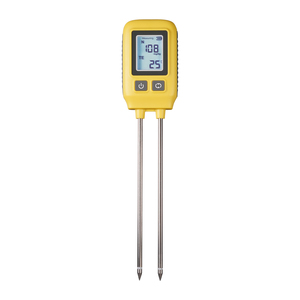
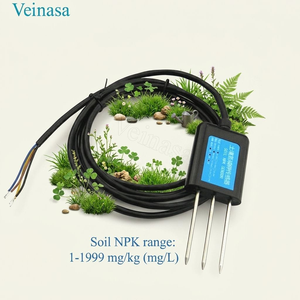
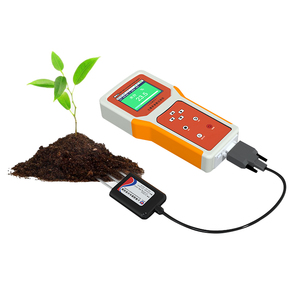
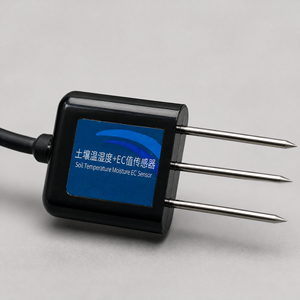
1. Executive Summary & Technological Paradigm in Soil Fertility Telemetry
In modern agricultural engineering and smart greenhouse management, soil fertility monitoring sensors serve as the essential data-acquisition backbone for automated fertigation systems, variable-rate nutrient dosing, and regenerative land management. Historically, soil testing relied heavily on manual field sampling followed by wet-chemistry laboratory testing (such as ICP-OES or Bray/Olsen extraction methods). While accurate, traditional testing creates critical operational latency, making real-time closed-loop control impossible.
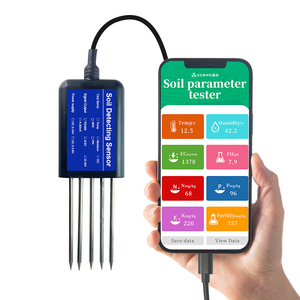
Industrial IoT (IIoT) fertility sensors bridge this micro-nutritional gap by continuously tracking chemical and physical indicators—primarily Electrical Conductivity (EC), volumetric water content (VWC), dielectric permittivity, total dissolved solids (TDS), pH, and active Nitrogen, Phosphorus, and Potassium (NPK) ion proxy signals directly within the root zone matrix.
For global procurement managers, system integrators, and B2B distributors, sourcing CE-certified fertility sensors ensures compliance with strict European Conformity mandates, specifically standard EN 61326-1 for Electrical Equipment for Measurement, Control, and Laboratory Use (EMC directive 2014/30/EU) and the RoHS Directive (2011/65/EU) restricting hazardous substances in electronics. Modern OEM manufacturing facilities utilize high-frequency Time-Domain Reflectometry (TDR) or Frequency Domain Reflectometry (FDR) circuitry coupled with anti-corrosive 316L stainless steel electrode arrays potted in black epoxy resin to achieve IP68 ingress protection, ensuring decade-long operational life in highly saline, acidic, or waterlogged substrates.
FDR & TDR High-Freq Dielectric Sensing
Utilizes 100MHz+ high-frequency electromagnetic pulses to measure soil moisture and EC independent of soil texture variations.
Hermetic IP68 Epoxy Potting
Vacuum-injected polyurethane polymer resin protects internal microprocessors against soil moisture, acid corrosion, and mechanical stress.
RS485 Modbus-RTU & Wireless LoRa
Standardized industrial communication protocol supporting multi-node daisy-chain networks up to 1200 meters or ultra-long-range sub-GHz telemetry.
2. Future Procurement & Global Market Trends in Fertility Sensor Manufacturing
As precision agriculture shifts from reactive management to predictive, AI-driven autonomous farming, the procurement demands for soil fertility hardware are undergoing structural shifts. Buyers and agricultural enterprise sourcing teams must align their supply chain strategies with several technical advancements:
A. Multi-Parameter Single-Probe Integration (8-in-1 Sensing Heads)
Single-parameter sensors (e.g., dedicated soil moisture stakes) are being phased out in enterprise operations due to high installation labor costs and telemetry node overhead. Modern OEM factories are standardizing on integrated 4-in-1, 7-in-1, and 8-in-1 sensor architectures. These combine Soil Temperature, Volumetric Moisture, Electrical Conductivity (EC), pH, Nitrogen (N), Phosphorus (P), Potassium (K), and Salinity into a single probe shaft. This reduces balance-of-system (BOS) wiring by up to 75% and lowers gateway power budgets.
B. Shift Toward Solid-State Ion-Selective Electrodes (ISE)
While traditional EC-based proxies estimate total nutrient load via bulk ionic strength, next-generation CE certified factories are commercializing miniaturized Solid-State Ion-Selective Field-Effect Transistors (ISFET) and specialized optical reagentless sensors. These sensors differentiate specific nitrate ($NO_3^-$), ammonium ($NH_4^+$), phosphate ($H_2PO_4^-$), and potassium ($K^+$) ions directly in soil pore water, allowing autonomous fertigation systems to tune macro-nutrients dynamically based on crop growth stages.
C. Autonomous Off-Grid Edge Computing & Solar Mesh Telemetry
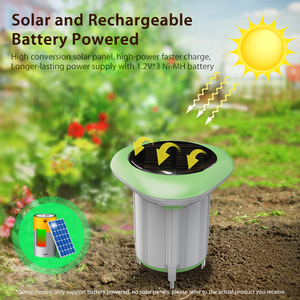
In extensive field operations where grid power is unavailable, sensors must operate autonomously for up to 5–10 years. Sourcing trends favor low-power microcontrollers integrated with mini monocrystalline solar panels and internal LiFePO4 batteries. Combined with sub-GHz low-power wide-area networks (LoRaWAN, NB-IoT, Cat-M1), these sensors transmit real-time telemetry directly to cloud platforms (via MQTT/HTTP APIs) while operating at micro-ampere sleep currents.
- Standardization on Industrial Protocol Statically Calibrated Probes: Widespread adoption of Modbus-RTU over RS485 enables plug-and-play interoperability with global PLCs (Siemens, Schneider, Delta) and ag-drones.
- Temperature-Compensated Digital Signal Processing: Integrated automatic temperature compensation (ATC) algorithms neutralize the exponential impact of soil thermal swings on EC and ion mobility measurements (typically 1.9% per °C).
- Sub-surface Long-Term Stability: Anti-fouling titanium alloy and 316L stainless steel pin designs prevent oxidation film formation in acidic or highly organic soil media.
3. Manufacturing Blueprint & Quality Control Verification Standards
To maintain high yield rates and ensure precise field reliability, premier OEM factories adhere to stringent manufacturing workflows. Understanding these production steps helps B2B buyers audit supplier facilities effectively during OEM/ODM evaluation:
Stage 1: High-Precision SMT Circuit Assembly & Signal Conditioning
The core sensor board undergoes high-speed Surface Mount Technology (SMT) assembly featuring medical-grade operational amplifiers, high-resolution 16-bit ADCs (Analog-to-Digital Converters), and ultra-low-power microcontrollers (such as ARM Cortex-M series). The circuitry includes ESD protection diodes, surge protection, and reverse-polarity protection to handle field wiring mistakes.
Stage 2: Electromagnetic Field Calibration & Buffer Tank Testing
Before potting, each sensor circuit undergoes multi-point calibration in controlled liquid standard solution tanks. Electrical conductivity is calibrated against standard $1413 \, \mu\text{S/cm}$ and $12.88 \, \text{mS/cm}$ KCl reference solutions. Temperature compensation coefficients are programmed into internal EEPROM memory to guarantee high linear accuracy ($R^2 > 0.998$).
Stage 3: High-Vacuum Epoxy Injection & Thermal Shock Testing
The probe assembly is placed in a vacuum degasser during polyurethane/epoxy resin injection to eliminate micro-bubbles that cause high-voltage breakdown or water vapor seepage. Following cure, sensors undergo thermal cycling tests from $-40^\circ\text{C}$ to $+85^\circ\text{C}$ and 72-hour continuous immersion testing under 1-meter water head pressure to verify IP68 integrity.
Stage 4: CE Electromagnetic Compatibility (EMC) Compliance
CE Certification requires rigorous testing in an anechoic chamber to prevent electromagnetic interference in industrial installations:
- EN 61000-4-2 (Electrostatic Discharge Immunity): Verified up to $\pm 8\text{kV}$ air discharge and $\pm 4\text{kV}$ contact discharge.
- EN 61000-4-4 (Electrical Fast Transient/Burst): Guarantees signal stability when high-power irrigation pumps or solenoids switch on the same power bus.
- EN 61000-4-6 (Immunity to Conducted Disturbances): Protects long RS485 communication lines against RF field induction.
4. Enterprise Manufacturing Strengths & Direct Factory OEM Capability
Partnering with a specialized sensor manufacturer offers clear operational and commercial advantages for enterprise buyers, system integrators, and government agricultural contractors:
Full In-House Manufacturing
Complete control over SMT assembly, CNC probe machining, automated epoxy potting, and multi-point liquid calibration rigs guarantees strict lot-to-lot consistency.
Tailored OEM/ODM Customization
Custom probe geometries, specialized cable lengths (up to 100 meters), custom RS485 Modbus register maps, private-label branding, and custom enclosure colors available.
Global Standard Compliance
Certified ISO 9001 quality management systems paired with complete CE, RoHS, and FCC test reports accelerate regulatory clearance in European and North American markets.
Frequently Asked Questions (FAQ) for Sourcing Managers
Technical and commercial clarity for industrial purchasing decisions, system integration, and warranty management.
What does CE certification mean for fertility monitoring sensors?
CE certification confirms that the fertility sensor complies with essential European health, safety, and environmental protection standards. Specifically, for electronic sensors, it validates compliance with the EMC Directive (2014/30/EU) for electromagnetic immunity and emissions, ensuring the sensor operates reliably near heavy industrial motors, agricultural pumps, and radio transmitters without signal distortion.
How do NPK fertility sensors estimate Nitrogen, Phosphorus, and Potassium levels?
Industrial NPK sensors utilize two primary methods: (1) High-frequency multi-frequency Electrical Conductivity (EC) dielectric spectral analysis, which calculates ionic concentration trends correlated to total available macro-nutrient ions; and (2) Integrated optical or solid-state ion-selective electrode (ISE) arrays that directly measure specific target ion activities ($NO_3^-$, $H_2PO_4^-$, $K^+$) in soil pore liquid, utilizing factory-calibrated linear response matrices.
What is the typical calibration lifecycle and maintenance requirement?
Solid-state FDR moisture, EC, and temperature probes feature near-zero drift and typically require calibration checks only once every 12 to 24 months under standard soil conditions. For high-salinity or heavy fertigation applications, cleaning the 316L stainless steel electrodes with alcohol or dilute acid every 6 months ensures optimal contact resistance.
Can these sensors integrate directly with standard PLCs and IoT Gateways?
Yes. Sensors equipped with RS485 interfaces communicate via the open Modbus-RTU protocol. This allows seamless connection to industrial PLCs (Siemens, Schneider, ABB), IoT telemetry nodes, microcontrollers (Arduino, ESP32, Raspberry Pi), and wireless gateways supporting standard baud rates (9600 bps default) over distances up to 1200 meters.
What is the minimum order quantity (MOQ) and lead time for OEM orders?
Standard OEM samples and evaluation kits are typically dispatched within 3 to 5 business days. Commercial bulk production orders (100 to 5,000 units) have standard lead times of 2 to 3 weeks, depending on custom cabling, private label laser etching, and specific parameter configuration requests.
Accelerate Your Smart Agriculture IoT Projects
Get direct factory wholesale pricing, technical datasheets, Modbus register maps, and CE compliance documentation from our application engineering team.
Inquire Now