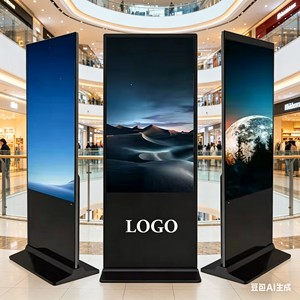
Enterprise Hardware Lineup
Commercial Indoor Display & Smart Monitor Portfolio
Engineered for 24/7 reliability, high optical clarity, seamless interactive touch, and cloud-managed digital signage applications.
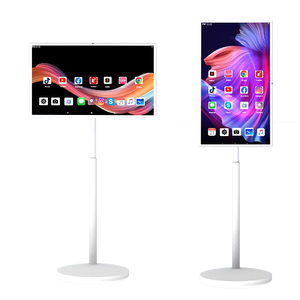
VETO 24 27 32 Inch 4-7H Battery Power Indoor 4K Smart Portable TV Wireless Android Interactive Display with Camera Microphone
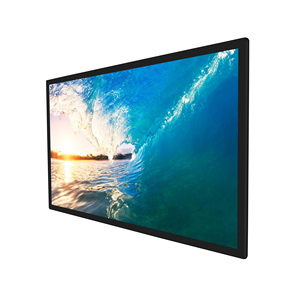
Wall Mount Indoor LCD Digital Signage TV 4K Screen Advertising Shopping Display Machine Window Facing Restaurant
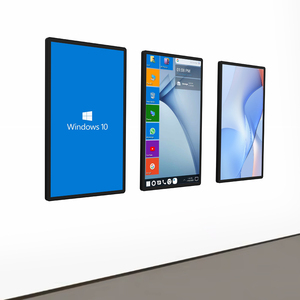
IP65 15.6 18.5 21.5 23.8 27 32 43 55 Inch Interact Smart Board Capacitive Touchscreen Monitor for Commercial
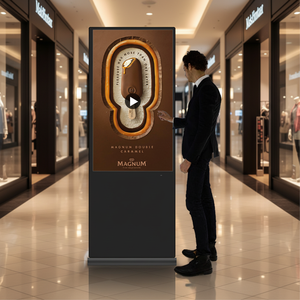
Interactive Indoor Kiosk Lcd Screen Capacitive Touch LCD Display Advertising Signage Monitor Video Displayer
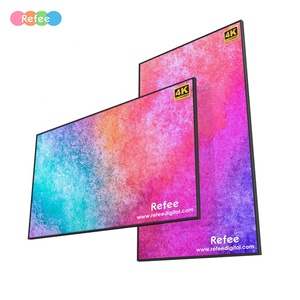
Refee Hot Sales Android QLED Touch Digital Menu Screen 4K Indoor Wall Mount Lcd Monitor Machine Advertising Display Signage
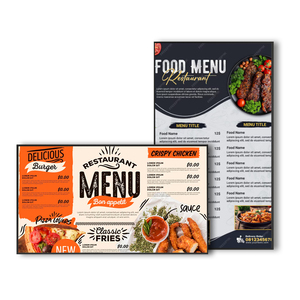
VETO 43 55 Inch 4K UHD Digital Signage Ultra-slim Thickness 28.5mm No Bezel LCD Advertising Display Android Digital Menu Board
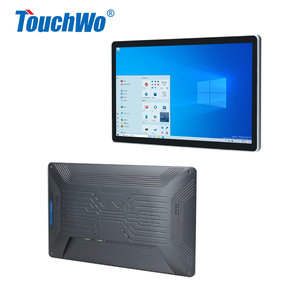
Wall Mounted 8 10 11 13 14 15 16 18 19 21 22 Inch Touch Screen Monitor Smart All in One Pc for KDS Display
Technical Architecture & Hardware Engineering
1. The Evolution of Smart Indoor Monitors: Commercial-Grade Engineering
In modern commercial environments—ranging from high-traffic retail centers and corporate hubs to healthcare facilities and quick-service restaurant (QSR) chains—standard consumer displays fail prematurely under rigorous operational demands. China’s premier smart indoor monitor original equipment manufacturers (OEMs) and original design manufacturers (ODMs) have bridged this gap through industrial-grade architectural innovation.
Unlike consumer-grade televisions engineered for 4 to 6 hours of intermittent daily operation, commercial smart monitors utilize commercial TFT-LCD panels equipped with high-temperature industrial liquid crystal substrates (Tni rated up to 110°C). This prevents blackening under direct window-facing thermal loads. Furthermore, advanced backlight assemblies incorporate direct-lit LED arrays coupled with quantum-dot (QLED) enhancement films, yielding broad color gamuts (exceeding 92% DCI-P3) and sustained luminescence without color shift over 50,000+ continuous operational hours.
Thermal & Power Architecture
Integrated fanless heat sinks engineered with aluminum extrusion alloys ensure optimal heat dissipation, operating seamlessly between -10°C to +60°C without thermal throttling.
Optical Bonding & Anti-Glare
Full optical bonding (LOCA/OCA) eliminates the air gap between cover glass and LCD, drastically reducing internal refraction, enhancing contrast ratio, and eliminating parallax in touch applications.
Edge-AI & SoC Platforms
Powered by high-performance ARM Cortex architectures (such as Rockchip RK3588 or Android 13 platforms) equipped with onboard Neural Processing Units (NPUs) for real-time demographic analytics and audience gaze tracking.
From an operational standpoint, structural integrity is paramount. Advanced chassis design prioritizes ultra-slim form factors—such as bezel-less housings measuring just 28.5mm in thickness—while housing robust internal shielding against Electromagnetic Interference (EMI) and Electrostatic Discharge (ESD). This structural rigor guarantees compliance with international safety and performance benchmarks required by worldwide enterprise procurement officers.
2. Benchmark Comparison: Consumer Displays vs. Enterprise Smart Monitors
When selecting display hardware for commercial deployments, global procurement teams must evaluate total cost of ownership (TCO) rather than initial capital expenditure. The table below outlines the core technical divergences between standard consumer TVs and China’s leading commercial-grade smart indoor monitors:
| Technical Parameter | Consumer Grade Displays | Enterprise Smart Indoor Monitors (China OEM/ODM) |
|---|---|---|
| Duty Cycle / Reliability | 8/7 (8 hours per day, 7 days/week) | 24/7/365 Continuous Industrial Operation |
| Luminescence / Brightness | 200 – 350 nits | 450 – 3,500 nits (High TNI Window-Facing Options) |
| Glass & Surface Treatment | Standard Untreated Soda-Lime Glass | 7H Mohs Tempered Anti-Glare (AG) & Anti-Fingerprint (AF) |
| Touch Response Matrix | Non-Touch or basic 2-point IR touch | 10-to-40 Point PCAP (Capacitive) with Zero-Gap Bonding |
| SoC Hardware Architecture | Closed Proprietary OS, Low RAM | Android 11/13, Linux Debian, or Windows IoT Dual-OS with NPU |
| Remote Device Management (RDM) | Not Supported | Full Cloud CMS, OTA Firmware updates, SNMP remote telemetry |
| Mean Time Between Failures (MTBF) | 15,000 – 20,000 Hours | > 50,000 to 70,000 Continuous Operating Hours |
China Manufacturing Ecosystem Impact
Global Supply Chain Dominance in Numbers
China’s LCD and interactive hardware supply chain provides unparalleled efficiency, component availability, and engineering agility.
78%
Global Share of TFT-LCD Panel Fabrication
50,000+
Hours Backlight Life Expectancy
180+
Countries Importing China Displays
< 0.3%
RMA Defect Rate in Tier-1 Factories
Strategic Procurement Horizons
3. Key Future Procurement & Industry Trends (2025–2030)
Navigating commercial hardware procurement requires aligning current infrastructure spending with technological advancements projected over the next 5 to 10 years. Decision-makers must evaluate five critical trends re-shaping smart monitor sourcing:
1. Ultra-High Brightness Window Displays
Retail storefronts are transitioning from conventional indoor monitors to high-Tni window-facing displays rated between 2,500 and 3,500 nits. Equipped with smart light sensors, these displays dynamically adjust brightness to balance outdoor sunlight readability with indoor power conservation.
2. Mobile, Battery-Integrated Kiosks
Flexible enterprise setups, pop-up retail stores, and trade shows are driving demand for cordless displays. Portable monitors integrating high-capacity lithium iron phosphate (LiFePO4) battery packs provide 4 to 7 hours of wireless operation alongside smooth-rolling omnidirectional castors.
3. Zero-Bezel Aesthetic & Ultra-Slim Modular Displays
Commercial interior designers demand seamless integration with modern architecture. Next-generation displays featuring sub-28.5mm depths and bezel-free aluminum bezels eliminate visual clutter, transforming public video monitors into interactive architectural glass elements.
4. Edge-AI Demographic Analytics
Monitors are evolving from passive screens into intelligent consumer insight hubs. Built-in wide-angle cameras integrated with NPU-powered local vision models track customer demographics, foot traffic dwell times, and impression conversion without violating GDPR privacy guidelines.
5. Green Energy & Low Carbon Standards
Global enterprise environmental, social, and governance (ESG) policies mandate eco-conscious display sourcing. Manufacturers now utilize low-power backlight algorithms, recyclable aluminum housings, and Energy Star certified power modules to cut operational emissions.
6. Open API & Universal CMS Integration
Proprietary, locked-down digital signage platforms are rapidly yielding to open Android, Linux, and webOS environments. Modern displays allow seamless REST API integration with major cloud CMS platforms like BrightSign, Navori, and Scala.
Enterprise Trust & Reliability (E-E-A-T)
4. Evaluating Manufacturer Competence: Why Sourcing from Top-Tier Chinese Suppliers Matters
Selecting a manufacturing partner in China extends beyond comparing unit pricing. High-volume buyers must ensure suppliers demonstrate rigorous engineering discipline, validated quality assurance protocols, and transparent supply chain integrity. Premier manufacturing facilities distinguish themselves through specialized operational controls:
Class 10,000 Cleanroom SMT Lines
Dust-free optical bonding and liquid crystal panel assembly prevent atmospheric micro-particles from compromising screen clarity, avoiding dead pixels and dust inclusions behind the touch surface.
Rigorous 48-Hour Thermal Burn-in Testing
Every display undergoes full thermal chamber aging tests at 50°C and 85% relative humidity for 48 uninterrupted hours before packaging, guaranteeing early-life component failure protection.
International Regulatory Compliance
Certified adherence to ISO 9001 quality management, ISO 14001 environmental safety, CE, FCC, RoHS, CCC, CB, and UL electrical safety standards, enabling seamless global customs clearance.
Modular OEM/ODM Customization
End-to-end engineering support ranging from custom metal fabrication and custom powder coating colors to custom silk-screen branding, peripheral integration (POS printers, RFID, scanners), and board-level firmware tuning.
Enterprise Data Security & GDPR Compliance
All smart Android displays feature hardened firmware options that strip consumer telemetry, integrate root protection, and support encrypted local storage alongside HIPAA & GDPR compliant network transport protocols.
Comprehensive Logistics & Spare Parts Commitment
Guaranteed availability of motherboard replacement units, power modules, and touch controllers for a minimum of 5 to 7 years post-production, safeguarding corporate hardware lifecycles.
Procurement Knowledge Base
Frequently Asked Questions for B2B Buyers
Detailed technical and logistical answers to assist procurement managers, system integrators, and distributors.
What is the minimum order quantity (MOQ) for custom OEM display production?
Standard catalog items usually have an MOQ of 1 to 5 units for sampling purposes. For customized OEM configurations (such as custom shell colors, logo silk-screening, specialized peripheral integrations, or custom motherboard specs), the typical MOQ ranges from 10 to 50 units depending on the screen size and tooling requirements.
How do PCAP touch screens compare against IR touch screens in indoor environments?
Projective Capacitive (PCAP) touch screens feature a sleek, flat glass front (zero-bezel profile) that is resistant to dust, water, and surface grease, offering high visual clarity and multi-touch gestures similar to modern smartphones. Infrared (IR) touch screens utilize a raised edge frame with embedded optical sensors; while cost-effective for extremely large screens (65"+), they are susceptible to false touches if dust or debris accumulates in the bezel channels.
Can these monitors support remote content management (CMS) software?
Yes. Displays powered by Android or Windows OS come pre-configured with open network protocols, enabling compatibility with third-party CMS platforms such as Novisign, Xibo, Navori, PosterBooking, and custom APK installations via cloud servers or USB deployment.
What packaging standards are implemented to prevent damage during ocean and air freight?
Displays are packaged using reinforced honeycomb export cartons embedded with high-density EPE (Expanded Polyethylene) protective foam shells. Large floor-standing kiosks and wall-mounted panels above 43 inches are further enclosed in custom fumigated wooden crates or flight cases to guarantee zero screen breakage during transit.
What warranty and RMA procedures are available for international bulk buyers?
Standard commercial warranties cover 12 to 36 months from the date of shipment. In bulk commercial contracts, suppliers provide 1% to 2% critical spare parts (such as mainboards, power supplies, and remote controllers) upfront with the container load, ensuring immediate local maintenance capability without operational downtime.
How do battery-powered portable displays perform under continuous daily usage?
Battery-powered models feature Grade-A lithium iron phosphate (LiFePO4) battery packs designed for over 2,000 charge cycles while maintaining 80%+ capacity. Internal battery management systems (BMS) protect against overcharging, deep discharge, and thermal risks, delivering 4 to 7 hours of continuous display runtime on a single 3.5-hour charge.
Accelerate Your Display Procurement & Custom OEM Projects
Connect directly with China’s leading commercial monitor engineering team to request technical datasheets, factory audits, sample units, and competitive wholesale pricing tailored to your region.