OEM Sensor Integration & Modular Products
Explore our turnkey OEM component modules, biomedical smart wearables, and clinical-grade thermal sensors ready for mass customization and white-label manufacturing.
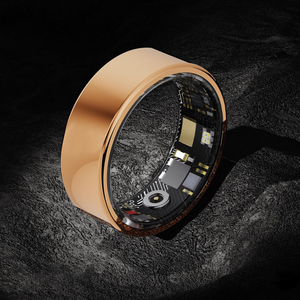
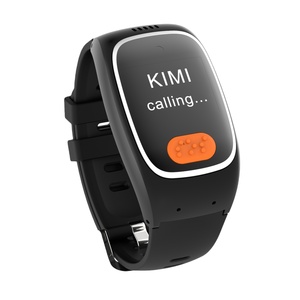
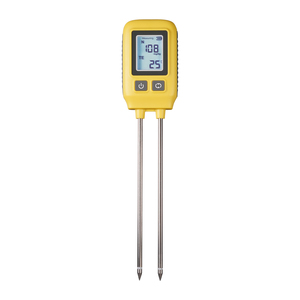
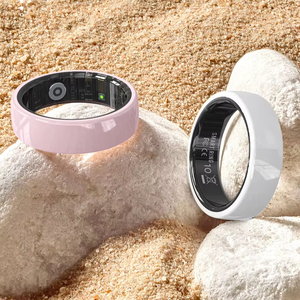
Industry Whitepaper: The Evolution of Human Body Temperature Sensing
In modern digital healthcare, remote patient monitoring (RPM), continuous ovulation tracking, and clinical wellness monitoring, custom body temperature sensor manufacturing forms the backbone of non-invasive diagnostics. Human skin and core thermal measurement require extreme measurement fidelity, high signal-to-noise ratio (SNR), and long-term calibration stability that standardized industrial temperature sensors simply cannot provide.
As a specialized OEM/ODM factory, we engineer sensor modules optimized for biomedical constraints: thermal coupling dynamics, skin contact pressure variance, ambient ambient temperature interference compensation, and micro-power budgets essential for continuous wearable electronics.
Technical Architecture Comparison: NTC Thermistors vs. MEMS IR Infrared Thermopiles vs. Digital ICs
Selecting the optimal sensor topology depends heavily on the intended form factor—whether it is a smart ring, continuous continuous glucose monitoring (CGM) companion patch, telehealth smartwatch, or clinical axillary probe. Below is an engineering overview of our OEM thermal sensor architectures:
| Technology Standard | Measurement Accuracy | Response Speed (t90) | Typical OEM Application | Manufacturing & Packaging Form Factor |
|---|---|---|---|---|
| High-Precision NTC Thermistors | ±0.05°C to ±0.1°C (35°C to 42°C range) | < 500 ms (contact-dependent) | Smart Rings, Wearable Patches, Medical Probes | Micro flexible printed circuits (FPC), biocompatible resin encapsulation |
| MEMS Infrared Thermopiles | ±0.15°C to ±0.2°C (non-contact/tympanic) | < 100 ms | Non-contact forehead thermometers, Smart Earbuds (TWS) | TO-46 metal cans, surface-mount SMD LGA packages with optical lens filter |
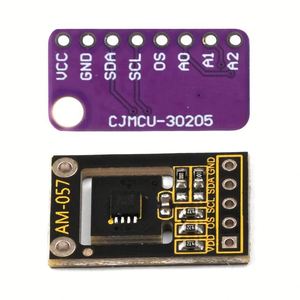
| Digital Sensor ICs (MAX30205 Class) | ±0.1°C Clinical Standard (16-bit ADC) | Programmable sampling rate | Medical Monitors, Telehealth Wristbands | Standard TDFN/WLP silicon packaging with direct I2C bus integration |
Customization Capabilities & OEM Factory Services
Our state-of-the-art production lines provide comprehensive Design-for-Manufacturability (DFM) and contract electronics manufacturing specifically tailored for bio-thermal sensing systems:
- Steinhart-Hart Coefficient Calibration: Every NTC thermal sensor module undergoes automated multi-point thermal bath calibration against NIST-traceable standards to program custom Steinhart-Hart coefficients directly into on-board EEPROM/MCU flash memory.
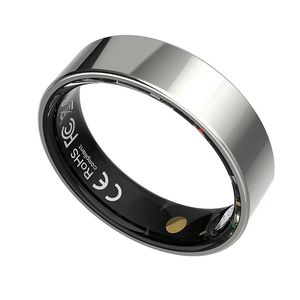
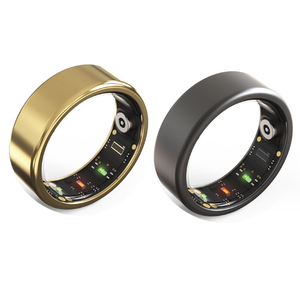
- Biocompatible Enclosure & Encapsulation: We work with ISO 10993 compliant materials, including USP Class VI medical-grade liquid silicone rubber (LSR), 316L surgical stainless steel thermal pads, and vacuum PVD titanium ring coatings to guarantee skin-friendly contact during multi-day wear.
- Micro-Flex PCB & Ultra-Thin Substrates: For compact form factors like smart rings and ear probes, we specialize in polyimide flexible PCBs under 0.15mm thickness with micro-coaxial shielding to eliminate electromagnetic interference (EMI) from onboard BLE 5.3 radios.
- IP68 Waterproof & Environmental Sealing: Advanced nano-coating and ultrasonic welding processes ensure our custom sensors withstand sweat immersion, daily showering, and deep-water hydrostatic pressure.
Future Procurement Trends: Core vs. Skin Temperature Modeling & Edge AI
B2B buyers and product managers evaluating temperature sensor OEM suppliers must consider key industry shifts driving the market through 2030:
1. Shift from Peripheral Skin Temp to Core Body Temperature Algorithms: Peripheral skin temperature fluctuates dramatically based on environment. Next-generation OEM modules embed dual-sensor heat-flux architectures combined with MCU-level algorithmic estimation to calculate real-time Core Body Temperature (CBT) non-invasively.
2. Fusion with Multi-Biomarker Suites: Standalone temperature monitoring is rapidly converging with continuous Photoplethysmography (PPG) optical arrays (Heart Rate Variability, SpO2) and Continuous Glucose Monitoring (CGM). Integrated thermal channels are now used to compensate for temperature-induced optical signal drift in PPG sensors.
3. Low-Power Edge Computing & Predictive Alerts: Modern OEM sensor firmware now integrates ultra-low-power microcontrollers capable of running on-device machine learning models to detect fever spikes, circadian rhythm shifts, and ovulation windows without overloading host smartphone battery life.
Body Temperature Sensor Procurement FAQ
Common technical, compliance, and logistics questions answered by our engineering team.
Q1: What accuracy standards can your factory guarantee for OEM medical sensors?
Our factory manufactures custom NTC and digital sensor modules meeting ASTM E1112 and ISO 80601-2-56 clinical thermometry standards. In the human physiological range of 35.0°C to 42.0°C, we provide certified accuracy up to ±0.05°C through 100% individual blackbody/fluid bath calibration.
Q2: Can you custom-design sensors for extremely compact wearables like Smart Rings?
Yes. We specialize in sub-millimeter NTC thermistors assembled on custom flexible polyimide PCBs with contoured thermal copper pads designed to maximize direct contact with fingerprint or finger-dorsal capillaries for rapid thermal equilibrium.
Q3: How do you solve thermal noise caused by ambient temperature changes?
We employ a differential dual-sensor setup: one sensor measures direct skin contact, while a second internal ambient sensor measures the outer shell temperature. Our embedded algorithm subtracts ambient gradient offsets to maintain exact physiological readings.
Q4: What is your typical Minimum Order Quantity (MOQ) and lead time for custom OEM/ODM tooling?
Standard modular sensor samples are available in 5–7 business days. Custom PCB tooling, mold engineering, and prototype runs (NRE phase) take 3 to 4 weeks. Commercial production MOQs start at 1,000 units for standard customized modules and 5,000 units for full custom enclosures.
Q5: Are your manufacturing processes ISO 13485 and FDA compliant?
Our manufacturing facilities operate under strict ISO 13485:2016 quality management systems for medical devices. We provide full device master records (DMR), material traceability reports, and testing documentation to support your FDA 510(k) or CE MDR regulatory filings.
Partner with a World-Class Temperature Sensor Factory
Need custom sensor geometries, clinical-grade accuracy calibration, or turnkey hardware manufacturing for your next-generation medical or wearable product?