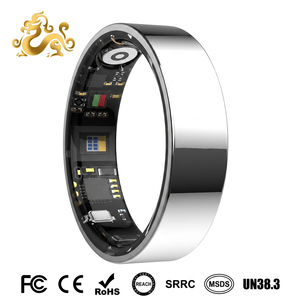
Precision Biometric Hardware Showcase
Explore our certified OEM/ODM smart rings, continuous temperature probes, telehealth wearables, and bio-sensor devices built for global distribution.
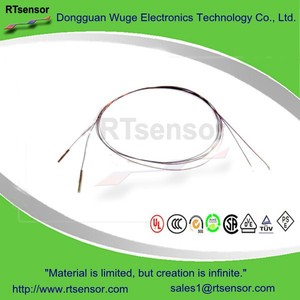
YSI 400 700 Adult Rectal Skin Human Body Temperature Sensor With Enameled Wire And Polyimide Tube
Contact Us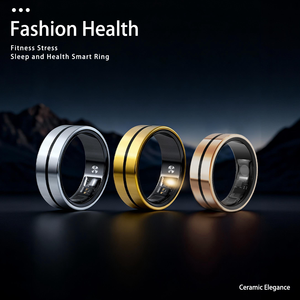
Medical Professional Grade Sport Style IP67 Waterproof Anti-bacterial Stainless Steel Smart Ring Health Monitoring Daily Fitness
Contact Us
[BF-230] Bio Flex Belly Rings Biocompatible Sensor Interfaces
Contact Us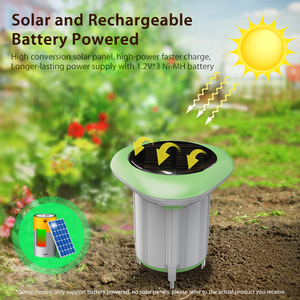
Solar Powered Wireless Soil Sensor Moisture Temperature NPK Fertility Detector Smart Garden Monitor Greenhouse Irrigation IP66
Contact Us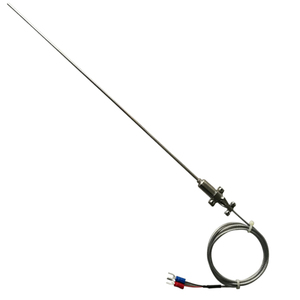
Sensor Outdoor Temperature Tube Skin Thermocouple IP65 Rated 1.5C Resolution Serial Port Communication OEM Customizable Probe
Contact Us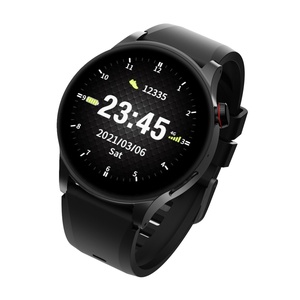
New Innovative GPS Tracking Bracelets L10N SOS Fall Detection Heart Rate Telehealth Watch Smart Alarm for Elderly(High Version)
Contact Us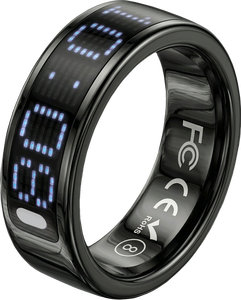
Islamic Stainless Steel Smart Ring Screen Prayer Vibration Reminder Digital Tasbeeh Counter Health Activity Tracking Muslims AI
Contact Us15M+
Sensors Exported Globally
<0.05%
Field Return Rate (RMA)
ISO 13485
Medical Plant Certified
180+
Global Enterprise Clients
Industry Technical Whitepaper: The Paradigm Shift in Heart Rate & Biometric Monitoring Systems
An in-depth technical analysis on optical photoplethysmography (PPG), electrocardiography (ECG) miniaturization, and OEM manufacturing workflows for enterprise telehealth providers.
Multi-Wavelength Optical PPG Array Engineering
Legacy heart rate monitors relied heavily on basic single-green LED photoplethysmography. Modern OEM hardware standards demand multi-spectral optical clusters integrating Green (525nm), Red (660nm), and Infrared (940nm) emitter diodes paired with high-gain silicon photodetectors. This multi-channel architecture enables non-invasive continuous arterial pulse wave detection, venous noise decoupling, and high-accuracy SpO2 saturation tracking even across dark skin phototypes (Fitzpatrick Scale IV–VI).
Dual-Modal ECG + PPG Hybrid Fusion Architectures
To achieve clinical-grade cardiac rhythm metrics, tier-1 medical telemetry platforms combine optical PPG with single-lead or multi-lead Electrocardiography (ECG). By capturing both micro-volt electrical depolarization signals (QRS complex) and mechanical blood volume shifts, our custom firmware calculates precise Pulse Transit Time (PTT). PTT serves as a continuous surrogate indicator for cuffless blood pressure monitoring, early arrhythmia detection (AFib), and autonomic nervous system stress assessment.
On-Chip Machine Learning & Motion Artifact Mitigation
Physical activity introduces significant motion artifacts that disrupt optical readings. As a specialized ODM manufacturer, we implement high-rate 6-Axis Inertial Measurement Units (IMU) coupled with Adaptive Kalman Filtering and neural network DSP algorithms on dual-core low-power processors. Motion noise is isolated and subtracted in real-time, delivering clean heart rate variability (HRV) metrics, resting heart rate (RHR), and exercise cardiac strain data during high-impact movement.
Global Sourcing Trends & Sourcing Intelligence (2025–2030)
Key strategic shifts driving procurement decisions among global medical device brand owners, enterprise telehealth platforms, and consumer electronics distributors.
1. Transition from Standalone Hardware to Integrated ODM Ecosystems
International buyers are moving away from sourcing isolated wearable hardware components. Sourcing directors now favor contract manufacturers capable of providing complete end-to-end stacks: biocompatible micro-housing, embedded low-power firmware (BLE 5.3/5.4 & NB-IoT), mobile SDKs (iOS/Android), and HIPAA/GDPR-compliant cloud data ingestion APIs. Turnkey ODM solutions reduce time-to-market by up to 65% compared to multi-vendor component assembly.
2. Miniaturization into Finger-Worn & Specialized Form Factors
The wearable telemetry landscape is undergoing rapid miniaturization. Smart rings (such as titanium and medical stainless steel rings) are capturing significant market share from traditional wristbands. The finger’s dense palmar digital arteries provide a superior signal-to-noise ratio for optical PPG sensing compared to the dorsal wrist. OEM buyers are aggressively sourcing ultra-compact, high-density flexible PCBs (FPC) and micro-molded enclosures engineered for continuous 24/7 wearability.
3. Regulatory Compliance as a Non-Negotiable Procurement Baseline
Navigating global healthcare markets requires strict adherence to regulatory standards. Sourcing teams prioritize OEM exporters with audited manufacturing facilities operating under ISO 13485 (Medical Devices Quality Management Systems) and cleanroom assembly infrastructure. Devices destined for clinical telehealth, remote patient monitoring (RPM), or eldercare fall-detection must meet ISO 10993 biocompatibility, IEC 60601-1-2 EMC immunity, and local FDA 510(k) or CE MDR technical file requirements.
| OEM Architecture Category | Consumer-Grade Monitor | Clinical-Grade Telehealth Wearable | Enterprise ODM Solution Advantage |
|---|---|---|---|
| Optical Sensor Setup | Single-Green LED (525nm) | Multi-Spectral LED Array (Green/Red/IR) | Custom PPG placement + High-sensitivity Photodiode Array |
| Battery & Power Dynamics | 2–5 Days Battery Life | 5–15 Days (Ultra-Low Idle Current) | Optimized power management ICs + Qi Wireless Fast Charging |
| Data Telemetry Protocol | Basic BLE 4.2 Standard | BLE 5.3 / Encrypted AES-128 / NB-IoT | Custom GATT profiles, RAW PPG export & OTA firmware updates |
| Enclosure & Ingress Protection | IP65 Splash Proof (ABS Plastic) | IP68 Waterproof 5ATM / Medical Titanium | Biocompatible PVD coating, anti-bacterial stainless steel, skin-safe resins |
| Certifications & Standards | CE / FCC Basic RoHS | ISO 13485 / FDA 510(k) / IEC 60601-1 | Full regulatory technical file support & traceability audit trail |
Future Development Trends in Heart Rate & Health Sensing
Anticipating next-generation biometric innovations to future-proof enterprise product pipelines.
Non-Invasive Glucose & Metabolic Correlation
R&D efforts are focusing on combining continuous optical PPG readings, skin temperature changes, and bio-impedance to detect metabolic shifts. By cross-referencing circadian heart rate decay with thermal shifts, future OEM wearables will offer predictive metabolic and glycemic stress indices without skin puncture.
Solid-State Micro-Batteries & Energy Harvesting
Next-generation form factors (like smart rings and skin probes) are integrating high-density solid-state batteries and solar/kinetic micro-harvesting modules. This extends operational cycles to several weeks while eliminating fire hazards during rapid charging cycles.
AI-Driven Arrhythmia & Autonomic Stress Analytics
On-device micro-AI models process beat-to-beat (R-R interval) data to calculate real-time Root Mean Square of Successive Differences (RMSSD) and High-Frequency/Low-Frequency (HF/LF) ratios, instantly identifying sympathetic vs. parasympathetic nerve dominance and early onset cardiac fatigue.
Why Partner with Us: Enterprise OEM/ODM Capabilities
Leveraging deep industrial expertise, rigid quality control, and flexible contract manufacturing to scale your brand globally.
State-of-the-Art Cleanroom SMT Lines
Our automated Surface Mount Technology (SMT) production facility operates Class 100,000 cleanrooms equipped with 3D Automated Optical Inspection (AOI), X-ray solder verification, and high-speed chip shooters capable of mounting 0201 micro-components with ±10µm precision.
Full-Spectrum Turnkey Customization
From initial industrial design concepting, 3D rapid prototyping, tooling and precision injection molding to customized PCB layouts and embedded BLE protocol stack modifications, our in-house engineering team provides complete hardware and software ODM delivery.
Rigorous 100% End-of-Line Quality Assurance
Every manufactured unit undergoes comprehensive physical and electronic testing, including IP68 deep-water pressure testing, high-temperature/humidity environmental aging chamber validation, ESD immunity testing, and optical optical-power calibration against simulator reference devices.
Frequently Asked Questions for B2B Sourcing & Procurement
Addressing key technical specifications, OEM custom terms, minimum order quantities (MOQ), and export compliance protocols.
What are your standard Minimum Order Quantities (MOQ) for OEM vs. ODM production runs?
For existing white-label hardware models with custom laser logo engraving and standard custom packaging, our baseline MOQ starts at 500 to 1,000 units. For full ODM customization projects involving specialized PCB engineering, custom tooling molds, unique enclosure materials, and bespoke firmware integration, our standard starting MOQ is typically 3,000 to 5,000 units depending on technical complexity.
Do you provide RAW PPG data access and custom BLE API/SDK support for healthcare app developers?
Yes, we provide enterprise software development kits (SDKs) for iOS, Android, and Flutter, as well as native Bluetooth Low Energy (BLE) GATT profile documentation. For research facilities, clinical trial platforms, and medical app developers, our firmware can be configured to export raw photoplethysmography (PPG) waveforms, uncompressed R-R intervals, and 3-axis accelerometer data alongside processed heart rate metrics.
What quality certifications and international export clearances do your devices hold?
Our manufacturing plant operates strictly under ISO 13485 and ISO 9001 quality management standards. Our product catalog is tested and compliant with CE, FCC, RoHS, REACH, and WEEE requirements. Battery packs integrated into our smart rings and wearables are fully certified under UN38.3, IEC 62133, and MSDS safety guidelines to ensure smooth global air and ocean freight clearance.
How do you handle IP protection and non-disclosure agreements (NDA) for custom ODM designs?
We prioritize intellectual property security for all enterprise clients. Prior to discussing engineering schematics, industrial design renders, or proprietary algorithm integration, we execute legally binding Non-Disclosure Agreements (NDAs). Custom hardware tooling molds and proprietary firmware code developed under custom ODM contracts remain 100% the exclusive intellectual property of the client.
What is the standard lead time for prototype evaluation samples and mass production delivery?
Evaluation samples of existing OEM hardware products can be dispatched within 3 to 5 business days. Customized functional prototypes requiring PCB modification or custom 3D enclosure printing typically require 2 to 3 weeks. Mass production lead time is generally 35 to 45 calendar days following golden sample sign-off and PO deposit receipt.
Ready to Scale Your Wearable Health Line?
Partner with an industry-leading OEM/ODM heart rate monitor manufacturer. Speak with our Senior Biometric Hardware Engineers today to request sample evaluation kits, custom technical files, or factory audit schedules.
Contact Us