1. Executive Industry Whitepaper: OEM/ODM Manufacturing Excellence
In modern healthcare systems, industrial process control, and wearable self-quantification platforms, skin temperature sensing represents a critical frontline biometric. Skin temperature is not merely a localized thermal measurement; it serves as a non-invasive window into peripheral perfusion, circadian rhythm fluctuations, inflammatory responses, metabolic rate adjustments, and thermal overload in heavy processing machinery.
As a premier global OEM/ODM Skin Temperature Sensor Factory & Exporter, our manufacturing ecosystems operate at the intersection of micro-thermistors, advanced polymer science, and high-frequency digital telemetry. Operating under rigorous ISO 9001 and ISO 13485 quality management systems, our facilities produce custom temperature monitoring solutions designed to meet the exact electrical, mechanical, and regulatory demands of original equipment manufacturers across North America, Europe, Asia-Pacific, and the Middle East.
Our Core Manufacturing Architecture
Contract manufacturing of temperature probes requires absolute consistency. A variation of even 0.01mm in encapsulation thickness or an imbalance in epoxy resin mixing can induce thermal lag, drift, or electrical hysteresis. Our factory capabilities encompass:
- In-House NTC Ceramic Formulation & Wafer Fabrication: We synthesize high-purity transition metal oxides (Manganese, Nickel, Cobalt, Copper) to produce thermistor chips with precisely controlled Beta values (2252Ω to 100kΩ at 25°C) and tight resistance tolerances (down to ±0.1%).
- Class 100,000 Cleanroom Assembly: All medical-grade probes—including YSI 400/700 series compatible skin sensors, pediatric incubators probes, and continuous monitoring patches—are assembled in controlled environment rooms to prevent bio-burden contamination and particulate inclusion.
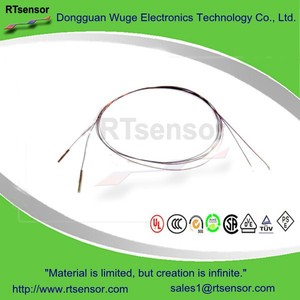
- Polyimide & Enameled Wire Micro-Soldering: Utilizing high-precision laser welding and micro-soldering stations, we join ultrafine 38 AWG to 44 AWG enameled copper wires to micro-thermistors, ensuring minimal thermal mass and rapid thermal response times (<0.8 seconds).
- Automated Multi-Point Water Bath Calibration: 100% of our medical and high-precision industrial sensors undergo automated liquid bath calibration against NIST-traceable reference standards across multi-stage temperature ramps.
2. Technical Taxonomy of Skin Temperature Sensing Technologies
Selecting the appropriate sensor technology for an OEM project depends heavily on the operational environment, required dynamic range, response speed, bio-compatibility, and signal conditioning constraints. We manufacture four primary families of skin temperature sensors:
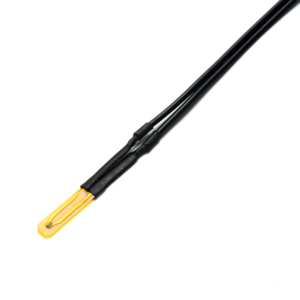
NTC Thermistor Probes
Utilizes negative temperature coefficient ceramics. Highly non-linear resistance-temperature curve providing extreme sensitivity over human physiological ranges (32°C to 42°C) with standard accuracy of ±0.05°C to ±0.1°C (YSI 400 standard: 2252Ω at 25°C).
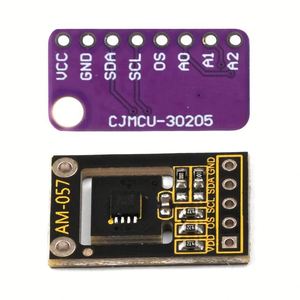
Digital I2C / 1-Wire IC Modules
Integrates silicon bandgap temperature sensors (such as MAX30205) with 16-bit analog-to-digital converters (ADC) on micro-PCBs. Offers direct digital output eliminating the need for host MCU ADC calibration and signal conditioning circuitry.
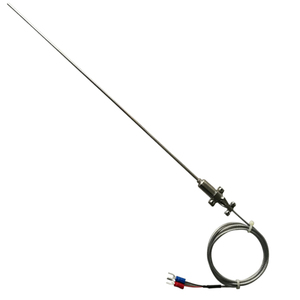
Industrial RTD & Thermocouples
Engineered for high-temperature surface contact, such as boiler tubes, chemical reaction vessel skins, and engine blocks. Utilizes Pt100/Pt1000 thin-film elements or Type K/N thermocouples encapsulated in IP65/IP68 stainless steel probes.
Detailed Sensor Engineering Specification Matrix
The table below highlights technical metrics across our main OEM/ODM product lines for engineering evaluations:
| Sensor Architecture | Typical Applications | Operating Range | Standard Accuracy | Key Packaging Material |
|---|---|---|---|---|
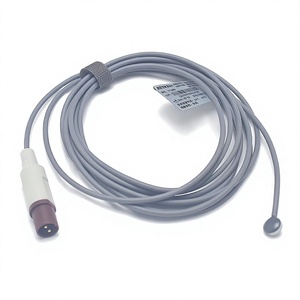
| YSI 400 Medical NTC Probe | Patient Monitoring, ICU, Operating Rooms | 0°C to +60°C | ±0.05°C (35°C–42°C) | Medical TPU, Gold Plated Pins, Polyimide |
| MAX30205 Digital I2C Module | Smart Rings, Health Bands, Patch Wearables | 0°C to +50°C | ±0.1°C (37°C clinical range) | Flex PCB, Epoxy Encapsulation, FPC Connector |
| RF Beauty Device Thermistor | RF Skin Tightening, Laser Aesthetic Devices | -10°C to +100°C | ±0.1°C (Fast response <0.5s) | Stainless Steel Sheath, Thermal Paste, Braided Wire |
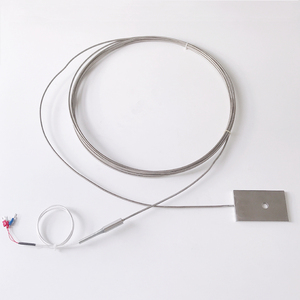
| Industrial Boiler Skin RTD | Petrochemical Pipes, Power Plant Boilers | -50°C to +60°C / +600°C | Class A Pt100 (±0.15°C) | 316L SS, Weldable Pad, Mineral Insulated Cable |
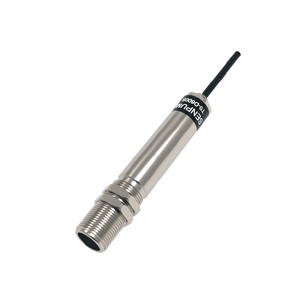
| Non-Contact Pyrometer (IR) | High-Speed Moving Parts, Non-Contact Skin Scan | -20°C to +300°C | ±1.0°C or 1% of reading | Anodized Aluminum Housing, Germanium Lens |
Why Global OEM/ODM Buyers Partner With Our Factory
Sourcing skin temperature sensors demands a manufacturer capable of bridging medical-grade biocompatibility with industrial manufacturing scalability. Our factory operates over 15,000 square meters of specialized production space, equipped with automated wire stripping, ultrasonic welding, custom silicone overmolding, and environmental stress screening chambers. Whether you require 500 customized boiler tube thermocouples or 5,000,000 continuous temperature patch micro-assemblies, our engineering team provides direct Design-for-Manufacturability (DFM) support, fast prototype turnarounds (under 10 business days), and total regulatory transparency including REACH, RoHS, ISO 10993 cytotoxicity compliance, and CE certifications.
3. Strategic Procurement Trends & Future Market Developments (2025–2030)
The global market for skin temperature sensors is experiencing structural shifts driven by advancements in wearable medical telemetry, AI-assisted health diagnostics, energy infrastructure modernization, and aesthetic device innovation. As procurement managers and technical directors evaluate supply chain partners, four major macro-trends must shape technical specifications:
Trend 1: Micro-Miniaturization & Flexible Polyimide Integration for Wearable Ecosystems
Traditional medical skin probes rely on cylindrical metallic caps or disk sensors attached with adhesive tape. However, modern consumer health wearables—such as smart rings, continuous health patches, and ovulation-tracking wristbands—demand sub-millimeter profiles.
Procurement is shifting heavily toward ultra-thin Polyimide Flexible Printed Circuits (FPC) embedded with micro-thermistors (0201 package size) or low-profile digital temperature ICs. Polyimide substrates provide exceptional flexural durability, low thermal mass, and direct skin contact compatibility. OEM factories that offer combined SMT micro-placement and soft silicone overmolding are outperforming traditional cable assembly vendors.
Trend 2: Continuous Dynamic Perfusion Monitoring & Multi-Sensor Fusion
Skin temperature fluctuates based on ambient temperature, vascular constriction, sweat evaporation, and physical exertion. Standalone skin temperature measurements are increasingly replaced by multi-sensor arrays. Modern OEM inquiries frequently request integrated sub-assemblies combining:
- Photoplethysmography (PPG) + Skin Temperature: Allows algorithms to cross-reference peripheral pulse amplitude with micro-vascular thermal changes for accurate heat flux and core body temperature estimation.
- Bio-Impedance (EDA/GSR) + Temperature: Essential for stress monitoring and sleep stage tracking, requiring non-reactive skin contact materials like gold-plated brass or medical grade 316L stainless steel electrodes.
Trend 3: Heavy Industrial Transition to Weldable, Mineral-Insulated (MI) Tube Skin Probes
In industrial refining, petrochemical processing, and thermal power generation, monitoring boiler tube and pipe skin temperature prevents catastrophic metal fatigue and coking. Future procurement trends emphasize Class A Pt100/Pt1000 RTDs housed within knife-edge weldable pads.
Engineers require mineral-insulated cable construction capable of withstanding extreme vibration, thermal cycling up to 650°C, and sulfurous corrosive environments (utilizing Hastelloy C-276 and Inconel 600 sheathing). High-spec industrial buyers are mandating IP67/IP68 serial communication transmitters (Modbus RS485, HART protocol) built directly into terminal heads to reduce signal degradation over long cable runs.
Trend 4: AI-Driven Calibration & Digital-Twin Sensor Telemetry
In smart medical device manufacturing, individual sensor calibration curves are no longer stored solely on hardware trim resistors. OEM buyers are adopting cloud-synchronized calibration profiles. Each temperature probe is laser-etched with a unique DataMatrix code storing its individual Steinhart-Hart coefficients ($A, B, C$) determined during factory bath testing.
When plugged into a patient monitor or connected device, the software reads the cloud profile, dynamically eliminating resistance tolerances and elevating measurement precision to near-laboratory standards (±0.01°C).
4. OEM/ODM Customization Capabilities & Quality Control Protocols
As a direct factory exporter, our primary value proposition lies in turnkey customization tailored to your exact bill of materials (BOM) and mechanical drawings. We do not force off-the-shelf compromises. Every parameter can be modified:
Biocompatible Materials
Selection of USP Class VI medical grade Thermoplastic Polyurethane (TPU), liquid silicone rubber (LSR), latex-free foam pads, and non-allergenic acrylic adhesives tested for 24-hour to 30-day skin contact safety (ISO 10993 compliant).
Custom Connector Integration
Termination options including 2-Pin/3-Pin Molex, JST micro-pitch, Lemo-compatible push-pull connectors, 6.35mm/3.5mm audio jacks, phone jacks, or custom overmolded strain relief boots designed for high insertion cycle durability.
Fast Thermal Response Engineering
Custom probe tips engineered with aluminum, silver-plated copper, or ultra-thin stainless steel housings (<0.15mm wall thickness) bonded with high thermal conductivity epoxies (>3.0 W/m·K) for rapid thermal equilibrium.
Strict Factory Quality Assurance Pipeline
To maintain zero-defect export standards across millions of units, our production lines implement a 5-stage quality gateway:
- Raw Material IQC: Spectral verification of metal alloys, electrical insulation resistance check of wire spools, and thermistor chip R25 lot sampling.
- In-Process Solder & Weld Testing: Automated Optical Inspection (AOI) and pull-force testing (minimum 15N to 50N depending on wire gauge) on all electrical joints.
- Potting & Overmolding Hermeticity Screening: 100% helium leak detection or IP67/IP68 water immersion testing for probes designed for liquid immersion or repeated clinical disinfection.
- Multi-Point Bath Calibration (100% Testing): Computer-controlled oil/water calibration baths verify resistance across specific target temperatures (e.g., 25°C, 37°C, 45°C, 100°C) to guarantee tolerance compliance.
- Final OQC & Bio-Burden Inspection: Visual cosmetics, pin continuity, high-voltage dielectric breakdown testing (up to 1500V AC), and cleanroom sterile packaging validation.
5. Comprehensive Procurement & Engineering FAQ
Below are technical and commercial answers to common questions asked by international procurement managers, hardware engineers, and quality directors during OEM project onboarding.
Partner with a Certified OEM/ODM Sensor Factory
Request customized engineering drawings, request free prototype samples, or receive a formal factory RFQ within 24 hours. Our technical team is ready to support your custom design requirements.
Contact Us