Telehealth Watch
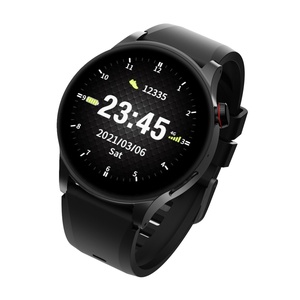
L10N GPS SOS Fall Detection Smart Telehealth Watch
GPS + LBS
Fall Detection
HRV Monitoring
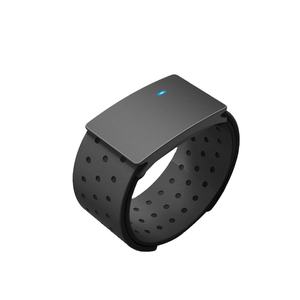
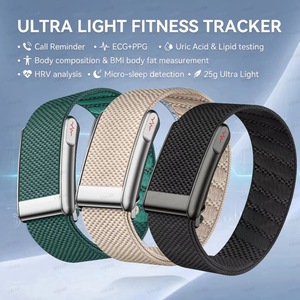
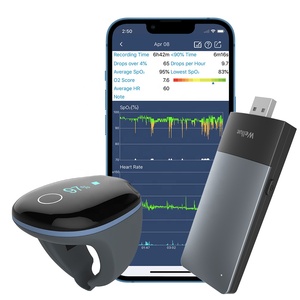
Explore high-precision commercial wearables, multi-biomarker monitoring rings, fall detection GPS bracelets, and industrial telehealth hardware available for B2B procurement and SDK customization.
![[BF-230] Bio Flex Body Jewelry Tracker](/source_global/235bf3536e6f9629bcc94fa98d563a25/HTB1z7DVKFXXXXXQXFXXq6xXFXXXe.jpg_300x300.jpg)
The global personal health tracking industry is undergoing a structural paradigm shift. Sourcing leaders, telehealth procurement directors, and digital health software brands are transitioning away from generic white-label fitness bands toward clinically validated, edge-computing biometrical platforms. In this evolving market, procuring personal health trackers requires evaluating technical specs far beyond step counting or basic heart-rate estimation.
Modern B2B purchasing agreements prioritize multi-sensor architecture, modular SDK availability, long-term battery autonomy, and strict regulatory compliance frameworks. As healthcare systems incorporate Remote Patient Monitoring (RPM) and specialized employee wellness initiatives, the demand for enterprise-grade health tracker manufacturers has grown exponentially.
Leading enterprise procurement decisions now center around Perfusion Index (PI) stability, Raw Optical PPG Data Stream Access, and On-Device Machine Learning Inference Speed. Suppliers providing accessible SDKs and ISO 13485 production environments command a distinct competitive advantage over consumer-grade manufacturers.
To assist procurement managers in vetting OEM/ODM vendors, our research team has mapped out the critical evaluation criteria required for enterprise-scale deployments:
| Evaluation Pillar | Legacy Consumer Requirement | Next-Gen B2B Telehealth Standard | Procurement Impact |
|---|---|---|---|
| Data Governance | Closed proprietary cloud app | ISO 27001, HIPAA & GDPR Compliant APIs | Ensures zero legal exposure across US, EU & GCC markets. |
| Hardware Sensing | Single-wavelength green PPG | Multi-wavelength PPG + Red/IR + Temp + 6-Axis IMU | Enables clinical SpO2, sleep apnea, & arrhythmia screening. |
| Firmware Architecture | Static fixed firmware | Dual-Core Edge NPU with FOTA Updates | Allows continuous algorithm upgrades over product lifecycle. |
| Power Management | 2–5 Days (Frequent Charging) | 15 to 45 Days (Chill / Turbo Modes) | Dramatically reduces patient drop-off and non-compliance. |
| Development Support | No developer access | UltraSignal SDK, Bluetooth 5.3 GATT Services | Reduces custom app integration cycles from months to weeks. |
Understanding where personal health tracker hardware is headed is critical for procurement executives planning 3-to-5-year product roadmaps. The convergence of consumer electronics and medical diagnostics has birthed a new class of hybrid devices. Below are the five dominant engineering trends reshaping personal health tracker manufacturing:
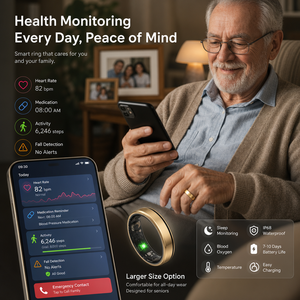
While wrist-worn wearables paved the way for consumer fitness, medical research conclusively proves that digital arteries in the fingers offer significantly higher signal-to-noise ratios. The skin on the palmar side of fingers is thinner, and blood perfusion is drastically higher than on the dorsal wrist. Consequently, manufacturers are heavily investing in Smart Rings and digital finger clips capable of tracking Heart Rate Variability (HRV), continuous resting heart rate, and micro-vascular temperature changes with clinical-grade fidelity.
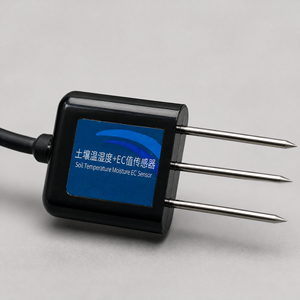
Single-metric health trackers are rapidly becoming obsolete. Sourcing strategies now target multi-modal biometric ecosystems. Devices that seamlessly integrate Continuous Glucose Monitoring (CGM) sensors with optical smart rings and home environmental monitors allow algorithms to decode how metabolic fluctuations directly impact sleep architecture, stress levels, and vascular recovery.
Transmitting raw sensor signals continuously to cloud servers strains device battery and increases wireless latency. Next-generation personal health tracker manufacturers are integrating low-power dual-core microcontrollers equipped with on-chip Neural Processing Units (NPUs). These chips run filtering algorithms directly on the device, extracting feature vectors for Atrial Fibrillation (AFib), Sleep Stage Classification (REM, Deep, Light), and circadian temperature deviations in real time.
Procurement teams are shifting away from cheap polycarbonate plastics to medical-grade biocompatible materials. Fighter jet-grade Titanium unibody casings with Physical Vapor Deposition (PVD) coatings and hypoallergenic resin inner linings ensure 24/7 wearability without causing contact dermatitis, skin irritation, or premature structural degradation under extreme ambient conditions.
For smart ring wearables in athletic and industrial environments, safety mechanisms are paramount. Top suppliers are engineering specialized emergency shear points (such as ProRelease™ structural technology), enabling rings to be safely severed during acute trauma swelling without risking finger ischemia or physical injury.
When selecting a top personal health tracker manufacturer, evaluating production infrastructure, quality control systems, and regulatory credentials is mandatory. Drawing baseline benchmarks from industry leaders such as Ultrahuman, enterprise partners require turn-key hardware and software capabilities that scale seamlessly across international markets.
In-house precision manufacturing facilities eliminate third-party assembly flaws, ensuring rigorous tolerance checks on micro-titanium unibodies, SMT sensor positioning, and optical lens clarity.
Enterprise data security is engineered directly into device communication protocols. Encrypted BLE throughput, zero-knowledge cloud storage, and compliance with global privacy mandates safeguard sensitive user health data.
Empower your internal developer team to build custom iOS, Android, and web applications. Raw biometrical telemetry (HRV, skin temperature, SpO2, movement indexes) is streamed smoothly via documented developer endpoints.
Algorithms are co-developed with an international medical advisory board and validated through peer-reviewed studies published in leading scientific journals such as Scientific Reports (Nature Portfolio).
Deliver maximum value to end consumers. Enterprise partners receive lifetime access to core biometric monitoring without forced recurring fees, with optional modular software extensions (PowerPlugs™).
Established supply chain hubs spanning North America, Europe, United Kingdom, UAE, and Asia-Pacific allow rapid clearing, localized HSA/FSA eligibility, and fast regional warranty replacements.
Answers to common technical, manufacturing, and supply chain queries raised by enterprise sourcing teams during vendor evaluation.
Standard white-label hardware shipments usually start at low MOQs (100–500 units). However, for deep OEM customization—such as custom laser-engraved titanium logos, custom PVD color finishes, tailored SDK API endpoints, or fully branded retail boxes—the standard production threshold starts at 1,000 to 3,000 units per batch.
Our hardware and software pipelines adhere strictly to ISO 27001 security management, EU General Data Protection Regulation (GDPR), and US Health Insurance Portability and Accountability Act (HIPAA) standards. Data transmitted over Bluetooth Low Energy (BLE 5.3) is encrypted at the chip level via AES-128, ensuring that patient biometrics remain anonymized and secure against unauthorized interception.
Yes. Sourcing our SDK developer kits gives your software engineering team access to low-level signal data—including raw photoplethysmography (PPG) optical streams, 3D accelerometer motion vectors, skin temperature gradients, and inter-beat intervals (IBI). This raw data stream can be ingested directly into your custom predictive analytics or telehealth server algorithms.
To eliminate sizing exchanges and logistics overhead, enterprise partners are supplied with standardized Plastic Sizing Kits (covering sizes 5 through 14). End-users test sizing for 24 hours to account for diurnal swelling before physical rings are dispatched. Bulk orders are managed through digitized redemption vouchers or bulk localized shipments directly to regional corporate offices.
Our featured manufacturing platforms carry CE, FCC, RoHS, REACH, and IP68 waterproof certifications. For clinical remote patient monitoring, targeted models are produced inside ISO 13485 certified facilities, enabling integration into clinical trials, insurance wellness programs, and RPM software infrastructures.
Off-the-shelf catalog devices with software SDK integration can be fulfilled in 1 to 2 weeks. Custom firmware modifications, specialized sensor calibration, or bespoke shell finishes typically require 6 to 10 weeks from initial CAD specification approval to mass production shipment.
Connect with our senior B2B solutions architects to request sample hardware kits, technical SDK documentation, volume price tiers, and factory audit reports.