Featured OEM/ODM Wearable Health Sensors
Select medical-grade smart rings, biometric armbands, and telehealth tracking systems engineered for international exporters and brand distributors.
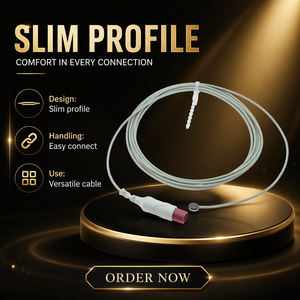
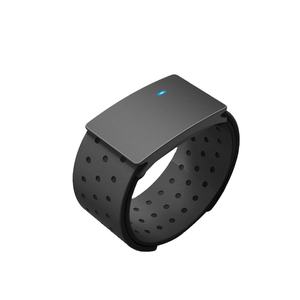
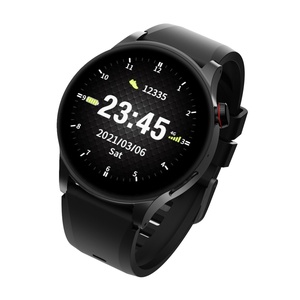
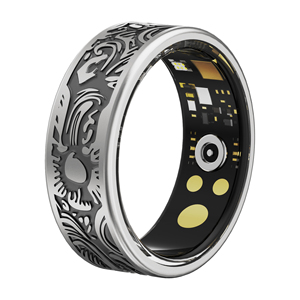
Executive B2B Sourcing Summary: The FemTech Smart Ring Revolution
The global female reproductive health market is undergoing a structural paradigm shift. Traditional basal body temperature (BBT) thermometers—which require rigid, manual waking measurements at identical daily intervals—and wrist-bound smartwatches are being rapidly superseded by continuous, finger-based physiological sensors. Ovulation tracking rings represent the apex of non-invasive, continuous biomarker monitoring, leveraging the superior perfusion index of digital palmar arteries to deliver clinical-grade biological insights.
For international healthcare brands, pharmaceutical distributors, medical device importers, and FemTech startups, identifying the top China ovulation tracking ring manufacturers and exporters is no longer merely a pricing exercise. It requires a deep technical audit of sensor micro-architecture, firmware-level digital signal processing (DSP), biocompatible encapsulation, and cloud-side predictive algorithm development. China’s micro-wearable manufacturing ecosystem in Shenzhen and Dongguan has matured from consumer electronics assembly to state-of-the-art medical foundry solutions, offering specialized OEM/ODM capabilities tailored to strict international regulatory frameworks (FDA 510(k), CE MDR Class IIa, ISO 13485, and HIPAA compliance).
Biomedical Engineering & Algorithm Principles of Ring-Based Ovulation Detection
To evaluate Chinese original equipment manufacturers (OEMs) and original design manufacturers (ODMs) effectively, enterprise procurement teams must understand the biological mechanisms and hardware requirements governing smart ring fertility tracking.
Progesterone Thermogenesis
Following ovulation, the corpus luteum secretes progesterone, acting on the hypothalamus to elevate resting body temperature by 0.3°C to 0.6°C (0.5°F to 1.0°F). Premium China manufacturers integrate high-resolution Negative Temperature Coefficient (NTC) thermistors capable of sampling at 1Hz with a resolution of 0.01°C to isolate this shift.
Circadian Temperature Filtering
Ambient room fluctuations during sleep can distort raw skin thermal readings. Advanced OEM firmware executes real-time circadian filtering algorithms, isolating nocturnal core-minimum skin temperatures during deep REM and Slow-Wave Sleep (SWS) cycles while filtering out motion noise.
Multi-Biomarker Fusion
Leading manufacturing platforms do not rely solely on temperature. By fusing NTC thermal data with Multi-Wavelength Optical Photoplethysmography (PPG) data—tracking Heart Rate Variability (HRV), resting heart rate (RHR), and respiration rate—the ring predicts fertile windows up to 5 days in advance.
Technical Evaluation Matrix for Enterprise B2B Buyers
When selecting a tier-1 smart ring OEM/ODM partner in China, engineering teams must audit candidate manufacturers across key hardware, firmware, and material parameters. Below is a comparative technical specification matrix detailing industry benchmarks versus top-tier manufacturing capabilities:
| Technical Parameter | Standard Consumer Tier | Enterprise OEM/ODM Tier (Recommended) | Biomedical Significance |
|---|---|---|---|
| Thermal Sensor Resolution | ±0.1°C (Single NTC Probe) | ±0.01°C to ±0.05°C (Dual-NTC Redundant Array) | Crucial for detecting subtle pre-ovulatory temperature dips (the biphasic shift). |
| Enclosure Architecture | Aluminum Alloy / Plastic Resin | Fighter Jet-Grade Titanium Unibody + PVD Coating | Eliminates hypoallergenic risks, provides IP68 100m waterproofing, ensures long-term wearability. |
| Microprocessor & ML Edge | 8-bit Single-core MCU | Dual-Core Cortex-M33 + On-Chip Machine Learning Engine | Executes on-ring sensor calibration, motion artifact rejection, and cycle flagging without phone sync. |
| On-Device Offline Memory | 24 to 48 Hours Data Buffer | Up to 250 Days NOR Flash Memory | Allows continuous off-grid data logging without data truncation during travel or extended disconnections. |
| Battery & Charging Cycle | 3 to 5 Days (15-20 mAh Polymer) | 12 to 15 Days Ring / Up to 45 Days with Qi Charging Case | High energy density anode batteries withstand 500+ charge cycles while maintaining ultralight weight (<3.0g). |
| SDK / API Ecosystem | Closed Proprietary App Only | UltraSignal Open Bluetooth SDK & Cloud API Integration | Enables seamless data streaming into proprietary corporate telehealth platforms, iOS HealthKit, and Android Health Connect. |
Future Sourcing & Manufacturing Trends (2026–2030)
As the smart ring industry matures, procurement executives must align their product roadmaps with upcoming technological shifts. China's top micro-wearable R&D facilities are pioneering several breakthrough technologies that will define the next generation of ovulation tracking rings:
1. Dual-Biological Sensing Architecture
Future-ready OEM ring architectures are transitioning from standalone temperature monitors to dual-metric metabolic-reproductive trackers. By pairing high-frequency PPG sensors with interstitial Continuous Glucose Monitor (CGM) software APIs and skin temperature thermistors, next-generation rings provide holistic metabolic insights—correlating blood glucose spikes and insulin sensitivity variations directly with luteal and follicular phase hormonal shifts.
2. ProRelease Safety & Ergonomic Biocompatibility
Industrial design in smart rings has expanded beyond structural aesthetics to safety engineering. Leading exporters are implementing emergency strain-relief notches and medical-grade hypoallergenic inner resin moldings (such as Swiss-imported Grilamid TR90 resin or biocompatible epoxy encapsulation). Technologies like ProRelease™ allow the ring structural shell to be safely flexed or removed in emergency swelling situations without breaking the encapsulated sensor stack.
3. Edge AI & Privacy-Preserving On-Device Inference
With increasing global scrutiny surrounding reproductive data privacy (GDPR in Europe, HIPAA in the US, and state-level data privacy legislation), Chinese hardware exporters are embedding dedicated neural processing units (NPUs) directly into the ring's System-on-Chip (SoC). This allows cycle tracking calculations, ovulation window predictions, and pattern detection (Cycle Flags™) to occur entirely on the local device, transmitting only encrypted biometric scores rather than raw sensitive logs to external cloud servers.
Enterprise OEM/ODM Customization Workflow for Exporters & Brands
Sourcing white-label smart rings from top Chinese suppliers involves a structured engineering workflow designed to minimize tooling risk, ensure regulatory compliance, and guarantee batch-to-batch manufacturing repeatability:
Phase 1: Industrial Design & Tooling
Customization begins with outer shell material selection (Titanium Grade 5, Ceramic, Stainless Steel 316L, or PVD color coatings). Custom CNC mold tooling establishes sizing runs (US Sizes 5 through 14) and inner sensor mold profiles.
Phase 2: Firmware & SDK Tailoring
Suppliers provide native iOS (Swift) and Android (Kotlin) SDKs (UltraSignal architecture) to facilitate seamless bluetooth pair-and-sync workflows. Custom BLE broadcast UUIDs and proprietary packet encryption algorithms are flashing during SMT assembly.
Phase 3: Automated Quality Assurance
100% of manufactured PCBA boards undergo automated thermal bath calibration testing across a 30.00°C to 42.00°C spectrum. Rings are subjected to IP68 pressure chambers and 72-hour burn-in battery endurance cycling before packaging.
Supplier Selection & Risk Mitigation Checklist
When vetting Chinese manufacturers for high-stakes healthcare products, buyers should implement a rigorous audit framework:
- ISO 13485 Medical QMS Certification: Ensure the manufacturing facility operates under an accredited Medical Device Quality Management System, rather than general ISO 9001 consumer electronics standards.
- Thermal Chamber Precision Verification: Request factory calibration test reports detailing the multi-point NTC temperature accuracy curve against certified reference mercury/platinum probes.
- Biocompatibility Testing Reports: Verify compliance with ISO 10993 (Cytotoxicity, Sensitization, and Intracutaneous Reactivity) for all skin-contact resin and metal PVD surfaces.
- Intellectual Property & Firmware Ownership: Ensure clear contractual terms regarding algorithm ownership, app API access, and protection against unauthorized white-label cloning.
- Traceability & Component Sourcing: Confirm the factory uses tier-1 component vendors (e.g., Nordic Semiconductor MCUs, Texas Instruments analog front-ends, Murata passive components).
B2B Procurement & Manufacturing FAQ
Partner with China’s Leading Smart Ring Foundry
Elevate your brand with medical-grade ovulation tracking rings, custom firmware development, and end-to-end ISO 13485 certified OEM/ODM manufacturing solutions.