Featured Bio-Sensing & Snoring Monitoring Ecosystem
As international procurement heads, medical device OEMs, and digital health distributors evaluate Chinese manufacturing ecosystem capabilities, our engineered product selection delivers clinical-grade sensor accuracy, micro-miniaturized form factors, and seamless telemetry integration. Explore our core OEM/ODM technology portfolio below:

Executive Overview: The Evolution of China's Snoring Detection & Sleep Telemetry Industry
The global market for sleep diagnostics and Obstructive Sleep Apnea (OSA) screening is undergoing a paradigm shift. Traditional in-lab Polysomnography (PSG) testing, while representing the gold standard in clinical diagnostic precision, presents significant logistical friction, high cost, and patient discomfort. As a result, non-invasive, continuous home sleep monitoring technology—specifically smart rings, wearable chest patches, sub-pillow acoustic tracking arrays, and wrist-worn pulse oximetry bands—has emerged as a foundational tier in preventive medicine and tele-health monitoring.
China has solidified its position as the premier hardware engineering and manufacturing hub for advanced medical wearables and sleep telemetry sensors. Leveraging sophisticated electronic micro-assembly supply chains, proprietary optical photoplethysmography (PPG) sensor integration, and advanced acoustic signal processing algorithms, leading Chinese OEMs and ODMs provide global brand owners with unparalleled scale, cost efficiency, and rapid iteration capability.
To maintain a decisive competitive edge, tier-one Chinese manufacturers have transitioned from low-cost plastic wearables to medical-grade titanium unibodies, military-grade PVD coatings, low-power Bluetooth (BLE 5.3) SoCs, and on-chip neural network processors capable of classifying respiratory disturbances at the edge without requiring perpetual cloud computing connectivity.
Core Technological Paradigms in Modern Snoring & Apnea Sensing
Navigating the supplier landscape in China requires a comprehensive understanding of the underlying sensor architectures that differentiate consumer-grade novelty trackers from clinical-grade sleep apnea diagnostic tools. Modern snoring detection devices produced by top-tier Chinese exporters incorporate three primary sensing paradigms:
Acoustic Micro-Transducers & Edge AI
High-sensitivity MEMS microphones integrated into smart rings, wearables, or bedside monitors capture micro-frequency sound signatures. On-chip digital signal processors (DSPs) separate decibel levels into environmental noise, heavy respiration, positional snoring, and obstructive hypopnea sound profiles using real-time machine learning models.
High-Perfusion Red/Infrared PPG
Sensors placed on high-capillary locations (such as fingers or wrists) measure arterial pulse waves. Dual-wavelength red and infrared light absorption detects nocturnal Oxygen Desaturation Index (ODI) events—a vital metric directly correlated with hypopnea and upper airway collapses during sleep.
Ballistocardiography & 6-Axis IMUs
Ultra-low-power 6-axis Inertial Measurement Units (IMUs) track micromotions caused by cardiac ejection fractions (Ballistocardiography) alongside sleep position changes. This allows algorithm pipelines to determine whether snoring events occur predominantly during supine (back) sleeping or REM sleep phases.
Technical Architecture Matrix: Snoring Detection Form Factors
Global distributors and health tech brand managers must select hardware architectures that align with their target market's compliance, battery, and compliance requirements. Below is a structural comparison of form factors manufactured in leading Chinese OEM hubs:
| Architecture & Form Factor | Primary Sensors Integrated | Key OEM Operational Benefits | Target Compliance & Certifications | Typical OEM MOQ |
|---|---|---|---|---|
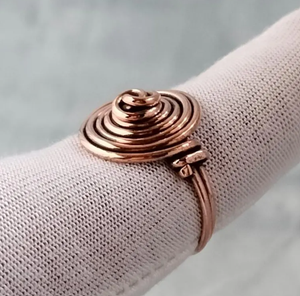
| Unibody Titanium Smart Ring | Multi-wavelength PPG, NTC Temperature, 6-Axis IMU | Maximum compliance (99% wear rate), high finger artery perfusion signal, up to 15-day standalone battery. | FDA 510(k), CE MDR Class IIa, ISO13485, RoHS | 500 Units |
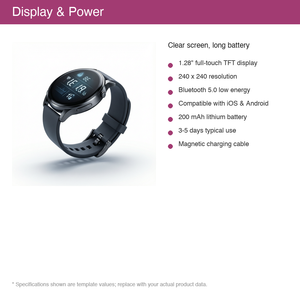
| Dual-Mode Telehealth Smartwatch | ECG Electrode Pads, Red/IR PPG, MEMS Mic, Skin Temp | Comprehensive cardiovascular telemetry, daytime activity combined with automated nocturnal snoring tracking. | CE, FCC, Telecare Protocol Certified, HIPAA Cloud | 1,000 Units |
| Chest-Strap / Adhesive Patch Sensor | Acoustic Vibration Transducer, Respiratory Inductance Band | Direct tracheal sound and vibration measurement; eliminates ambient noise interference completely. | Medical Class II, NMPA, FDA Cleared Path | 2,000 Units |
| Non-Contact Bedside Smart Monitor | 60GHz Millimeter-Wave Radar, Array Microphones | 100% zero-contact monitoring; ideal for elderly care, pediatric sleep screening, and hotel wellness integration. | CE, FCC, SRRC, RED Directive | 500 Units |
Global Sourcing Trends & Sourcing Roadmap (2025–2030)
Procurement directors and product managers sourcing snoring detection and sleep telemetry hardware from China must navigate evolving market demands. Strategic planning requires aligning factory sourcing with the following industry megatrends:
1. Edge-AI Neural DSP Integration
Transitioning processing from cloud backends to low-power edge microcontrollers (such as Nordic Semiconductor or Ambiq Micro platforms with custom neural acceleration) allows sleep devices to analyze acoustic waveforms locally. This drastically lowers monthly AWS cloud infrastructure costs for brand owners while ensuring ironclad patient data privacy compliant with GDPR and HIPAA regulations.
2. Sensor Fusion & Multi-Biomarker Correlation
Standalone decibel tracking is no longer sufficient for enterprise buyer positioning. Next-generation Chinese OEM designs utilize sensor fusion algorithms connecting acoustic snoring frequency, Heart Rate Variability (HRV) drops, nocturnal blood glucose fluctuations (via integrated continuous monitoring platforms), and micro-arousal skin conductance spikes.
3. Modular Software Subscriptions ("PowerPlugs")
Hardware gross margins are increasingly augmented by recurring software licensing models. Leading Chinese ODM partners provide pre-built SDKs and API gateways allowing brand owners to unlock specialty algorithm extensions—such as Atrial Fibrillation (AFib) screening, Respiratory Health tracking, and Positional Haptic Feedback therapy—via app-level micro-subscriptions.
Enterprise OEM/ODM Manufacturing Edge
Why leading medical technology brands, hospital groups, and digital health platforms partner with our automated production ecosystem:
Integrated UltraFactory SMT Assembly
Fully automated surface-mount technology (SMT) lines equipped with 3D Automated Optical Inspection (AOI) and X-ray chip verification ensure zero-defect PCB production for ultra-compact micro-wearables.
Clinical Advisory Board Validation
Algorithms are developed alongside leading somnologists and clinical research boards, undergoing rigorous benchmarking against gold-standard polysomnography (PSG) equipment to achieve >98% clinical correlation.
End-to-End Data Compliance (ISO 27001)
Hardware and cloud SDK architecture operate strictly within ISO 27001, GDPR, and HIPAA data governance guidelines, protecting sensitive biometric telemetry with AES-256 end-to-end encryption.
Uncompromising Durability & Testing
Every batch undergoes thermal shock testing, IP68 water submersion certification, drop resistance validation, and skin biocompatibility screening in ISO 10993 certified testing facilities.
Frequently Asked Questions (FAQ) for B2B Sourcing & OEM Procurement
Below are detailed responses to technical, regulatory, and commercial queries frequently raised by international medical device buyers, sourcing managers, and brand importers: