OEM/ODM Wearable Health Sensor Hardware Portfolio
Explore our medical-grade wearable hardware platforms engineered for rapid prototyping, white-label deployment, and seamless BLE/4G API integration within German healthcare networks.
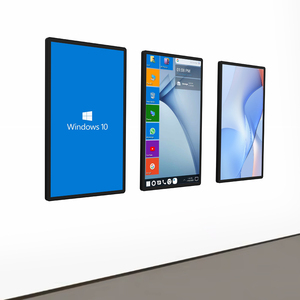
IP65 15.6 to 55 Inch Touchscreen Monitor for Commercial & Clinical Use
High-durability medical-grade capacitive touchscreen display designed for clinical telemetry hubs, hospital bedside monitoring, and interactive telehealth kiosks in Berlin care institutions.
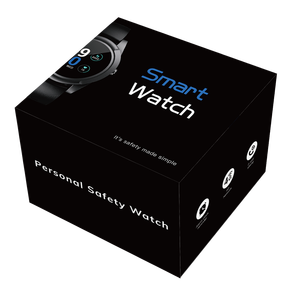
4G Android Waterproof Telehealth Elderly SOS Tracker Smart Watch
Equipped with 24/7 continuous PPG heart rate sensor, automated fall detection algorithms, 4G LTE cellular connectivity, and dedicated emergency voice calling for senior care networks.
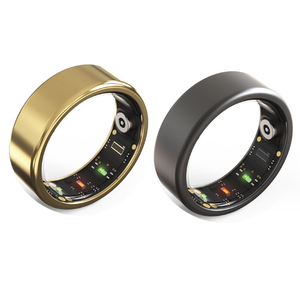
Wearable Finger Smart Ring Health Tracker Blood Oxygen Monitor
Ultra-lightweight titanium alloy chassis featuring dual-wavelength SpO2 sensors, clinical HRV telemetry, body temperature tracking, and an IP68 waterproof rating.
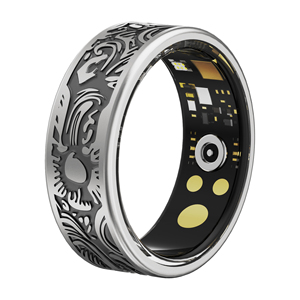
R16 Smart Ring App Control Edition AI Health & Sleep Monitor
Integrated with on-chip edge AI machine learning for automatic sleep architecture decoding, circadian rhythm analysis, and raw sensor SDK data streaming for iOS/Android.
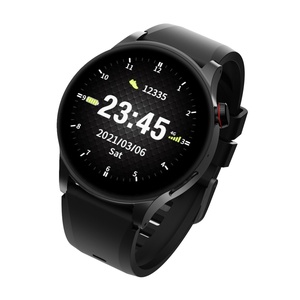
GPS Tracking Bracelet SOS Fall Detection Telehealth Watch
High-precision L10N GPS + Wi-Fi positioning bracelet engineered for psychiatric wards, nursing homes, and outpatient remote patient monitoring (RPM) setups.
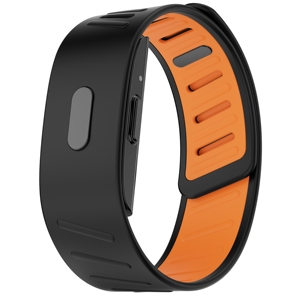
JCVital SDK API OEM/ODM AI Smart Recovery Tracker Wristband
Enterprise-ready wearable band with open API/SDK architecture. Designed specifically for B2B digital health app developers seeking raw PPG and IMU telemetry.
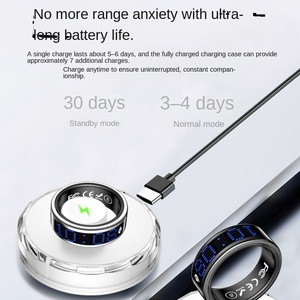
Smart Health Management Ring 8mm Ultra-Thin OLED Display
Combining an micro-OLED clock display with continuous biometric monitoring, optical heart rate tracking, and 7-day battery life in an ultra-thin 8mm profile.
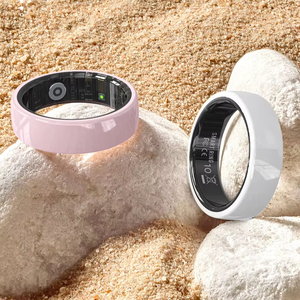
SHR Modern Ceramic Health Monitor Ring HRV & SpO2 Sensor
Premium medical-grade zirconia ceramic housing encapsulating bio-impedance sensors, high-frequency pulse wave velocity tracking, and customizable white-label apps.
Technical Whitepaper: OEM/ODM Wearable Sensor Manufacturing for Berlin's MedTech Landscape
The global convergence of preventive cardiology, decentralized clinical trials, and AI-driven chronic disease management has placed wearable sensor engineering at the forefront of modern medical technology. Within Germany—and specifically the vibrant digital health innovation hub of Berlin-Brandenburg—there is an escalating demand for medical-grade wearable hardware capable of interfacing smoothly with European cloud infrastructure and strict regulatory frameworks.
As a specialized OEM/ODM wearable health sensor manufacturer and B2B supplier serving Berlin, our operations bridge the gap between high-precision optical micro-electronics and commercial white-label deployment. Sourcing medical wearables requires far more than aesthetic casing; it demands rigorous multi-wavelength Photoplethysmography (PPG) optical design, low-noise Electrocardiogram (ECG) analog front-ends, thermal drift calibration, micro-power management units (PMU), and firmware security protocols compliant with European standards.
Engineering Excellence: Photoplethysmography (PPG) & Sensor Architecture
Our OEM/ODM wearable platform incorporates multi-channel optical sensor arrays configured with specific peak wavelengths (525nm Green for arterial pulse, 660nm Red and 940nm Infrared for deep-tissue arterial blood oxygen saturation / SpO2). By utilizing finger-based and wrist-based arteriolar perfusion dynamics, our hardware achieves a signal-to-noise ratio (SNR) that meets clinical monitoring thresholds even during motion artifacts.
- Dual-Core Micro-Controllers: Architecture powered by ARM Cortex-M33 with embedded hardware security modules (HSM) for AES-128/256 dynamic data encryption on chip.
- Bio-Impedance Sensor Array: Multi-frequency electrical skin conductance (Galvanic Skin Response / GSR) measuring autonomic nervous system arousal and stress rhythm.
- Thermal Drift Compensation: High-accuracy medical thermistors (calibrated to ±0.05°C) utilizing predictive heat-flux algorithms to isolate ambient temperature variations from core body skin changes.
- 6-Axis Inertial Measurement Unit (IMU): Embedded accelerometer and gyroscope algorithms trained for motion-artifact suppression, activity index calculation, and instant fall-detection vectors.
Localized Application Scenarios Across the Berlin Health Ecosystem
Berlin represents one of Europe's most rigorous and progressive healthcare technology environments. From leading university research centers like Charité – Universitätsmedizin Berlin to the thriving digital health startup accelerators in Adlershof and Mitte, localized hardware deployment requires precise adaptation to specific German clinical workflows.
1. Remote Patient Monitoring (RPM) in Berlin Hospital-to-Home Transitions
Hospitals across Berlin are rapidly adopting outpatient monitoring systems to reduce bed occupancy rates and minimize readmissions for chronic heart failure (CHF) and chronic obstructive pulmonary disease (COPD) patients. Our OEM/ODM smart bands and smart rings provide hospital networks with continuous telemetry. Vital signals—including resting heart rate variability (HRV), pulse wave velocity (PWV), and night SpO2 dips—are captured locally and uploaded via encrypted Bluetooth LE or 4G LTE gateways directly to hospital telemetry dashboards.
2. Integration into German DiGA (Digitale Gesundheitsanwendungen) Apps
Under the German Digital Healthcare Act (Digitale-Versorgung-Gesetz / DVG), digital health applications approved under the DiGA Fast-Track program by BfArM (Bundesinstitut für Arzneimittel und Medizinprodukte) can be prescribed by German physicians and reimbursed by statutory health insurance (GKV). Our white-label OEM smart rings and bands provide DiGA app developers in Berlin with raw, uncompressed sensor data streams via localized software development kits (SDKs for iOS and Android), ensuring zero vendor lock-in and seamless API payload matching.
3. Telehealth & Ambient Assisted Living (AAL) for Senior Care Networks
With an aging demographic across Berlin and the surrounding Brandenburg district, municipal care organizations require non-intrusive monitoring devices. Our 4G-enabled SOS smart watches and fall-detection GPS bracelets provide 24/7 location tracking, geofencing around care homes, automatic emergency alerts to nursing centers, and user-friendly interface designs tailored specifically for senior usability.
4. Corporate Wellness Programs in Berlin's Enterprise & Tech Hubs
Berlin's commercial tech sector prioritizes preventative employee wellness. Our customizable smart rings (such as the ceramic SHR and R16 models) enable corporate wellness providers to distribute branded, white-label sleep and stress tracking devices. Employees gain actionable insights into recovery metrics, circadian light exposure, and strain scores without compromising personal data privacy.
Regulatory Landscape & Strategic Market Trends in Germany & Europe
Procuring wearable health sensors for the German market demands full alignment with evolving European Union directives and German national statutory laws. Sourcing managers and CTOs must navigate strict technical, safety, and data-protection mandates.
EU Medical Device Regulation (MDR 2017/745) Compliance
The transition from the old MDD to the stringent EU MDR (2017/745) has elevated safety, clinical evaluation, and post-market surveillance (PMS) requirements for wearable medical hardware. As an experienced OEM/ODM manufacturer, our production processes adhere to ISO 13485:2016 quality management systems. We provide full technical documentation files, software lifecycle documentation (IEC 62304), risk management files (ISO 14971), and biocompatibility test reports (ISO 10993) necessary for CE marking under Class I, Class IIa, and Class IIb medical device categories.
GDPR Article 9 & BSI Cloud Sovereignty Standards
Health metrics collected by wearable devices constitute "special category data" under Article 9 of the General Data Protection Regulation (GDPR). German enterprises strictly enforce data minimization, on-device encryption, and local cloud hosting (such as AWS Frankfurt or Deutsche Telekom Open Telekom Cloud certified under BSI C5). Our firmware is engineered to strip personally identifiable information (PII) at the hardware layer, transmitting only anonymized, tokenized sensor payloads.
German Supply Chain Due Diligence Act (LkSG / Lieferkettensorgfaltspflichtengesetz)
German commercial buyers are legally accountable for environmental and human rights compliance throughout their upstream supply chains. Our manufacturing facilities offer end-to-end supply chain transparency, conflict-free mineral sourcing declarations, RoHS & REACH chemical safety certifications, and ESG-aligned manufacturing audits.
Why Sourcing Managers in Berlin Partner with Our OEM/ODM Manufacturing Platform
Building high-yield wearable health technology requires deep vertical integration—from silicon selection and optical mold design to SMT assembly and automated testing. Our integrated production facilities empower Berlin-based clients to scale quickly with minimized risk.
In-House UltraFactory Production
Fully automated Surface Mount Technology (SMT) lines, cleanroom optical module bonding, ultrasonic housing welding, and laser micro-machining ensure precision physical tolerances and IP68 water resistance.
Optical Calibration Laboratories
Every production unit undergoes multi-point optical simulator testing (spoke pulse simulation, variable perfusion index tests, ambient light interference rejection) to guarantee baseline accuracy prior to shipping.
Comprehensive White-Label Customization
Complete flexibility across physical enclosure materials (PVD titanium, medical-grade ceramic, hypoallergenic TPU), custom logo laser etching, white-label packaging, and custom Bluetooth device naming (UUIDs).
Robust Developer SDK & FOTA Architecture
Native iOS Swift and Android Kotlin SDKs alongside secure Firmware Over-The-Air (FOTA) update servers enable remote patch delivery and continuous algorithm enhancement across deployed fleets.
Frequently Asked Questions for Sourcing & Procurement in Berlin
All our wearable devices are manufactured under ISO 13485:2016 quality management systems. We provide comprehensive technical files including IEC 60601-1-2 EMC testing reports, ISO 10993 biocompatibility testing, and software validation documentation required by European Notified Bodies for CE marking under EU MDR (2017/745).
We offer full-stack ODM customization: physical casing materials (Titanium, Zirconia Ceramic, Aluminum), custom colorways, laser engraving, bespoke charging cases, localized packaging, customized BLE UUID identifiers, and complete mobile app SDKs with custom UI components.
Yes. Unlike consumer wearables that restrict access to aggregated metrics, our SDKs allow raw data streaming (unfiltered PPG light reflectance arrays, 50Hz/100Hz 3-axis accelerometer data, and micro-kelvin skin thermistor outputs) so your engineers can build proprietary algorithms.
For standard white-label hardware evaluation, sample kits ship within 5-7 working days. For custom OEM/ODM production runs, initial batch MOQs start at 500–1,000 units. Full NPI (New Product Introduction) cycles—from industrial design to mass production—typically span 8 to 14 weeks.
Data transmitted from our hardware uses hardware-enforced AES-128/256 dynamic encryption over BLE. No user telemetry is stored permanently on hardware buffers, and software payloads are completely unlinked from personal identities to simplify GDPR compliance for your cloud platform.
Partner with a Premier OEM/ODM Health Sensor Manufacturer Serving Berlin
Accelerate your medical device or digital health app launch. Request technical specification sheets, evaluation sample kits, or schedule an engineering conference call with our hardware teams today.